
From the landscapes of Alytus to the vastness of space: L. Slavinskaitė-Grigaitienė on art where reality meets imagination
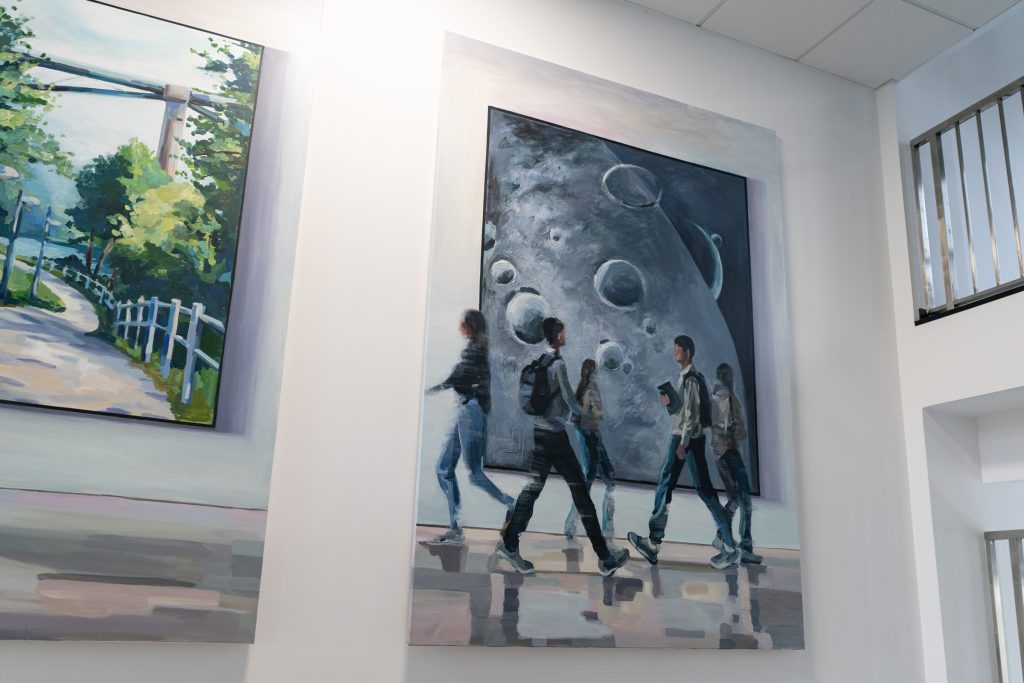
The Centre of Excellence in Food and Healthy Lifestyle in Alytus is home to paintings that intertwine motifs of the city’s landscape with images of outer space, exploring the relationship between people and the world around them.
Their creator, Laura Slavinskaitė-Grigaitienė, a artist and lecturer at the Faculty of Arts and Education of Kauno kolegija, shares how the idea for these works came about, why what we feel is just as important to her as what we see, and offers a glimpse into the less visible side of an artist’s creative life – from searching for inspiration to forming emotional attachments to paintings that, sooner or later, must be let go.
When a painting becomes part of a space
The artist reveals that the creative process behind the diptych displayed at the Centre of Excellence in Food and Healthy Lifestyle began in the spring, with the search for ideas, an analysis of the space and the development of visual concepts. The final stage of painting took place during the summer.
‘Before I started painting, I visited the faculty to explore its spaces and architecture so that the works would be designed specifically for this environment. While in Alytus, I observed the cityscape, the surroundings of the River Nemunas, the forests, the bridge and the hillfort. I also explored the faculty’s vision and the ideas behind it. All of this inspired me to create two distinct yet interconnected images,’ the artist explains.
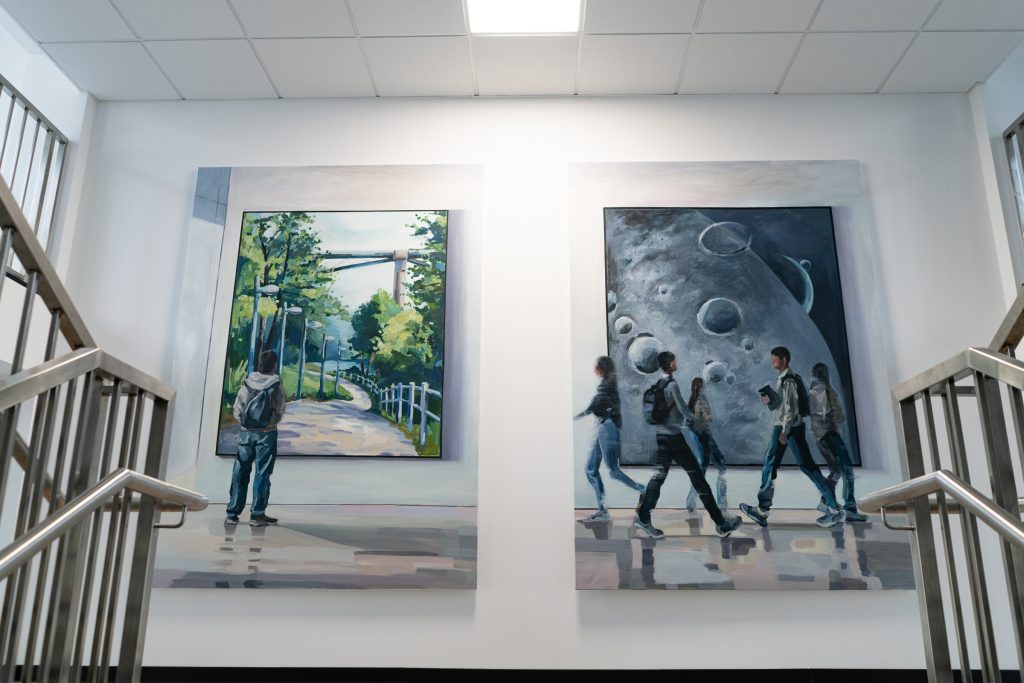
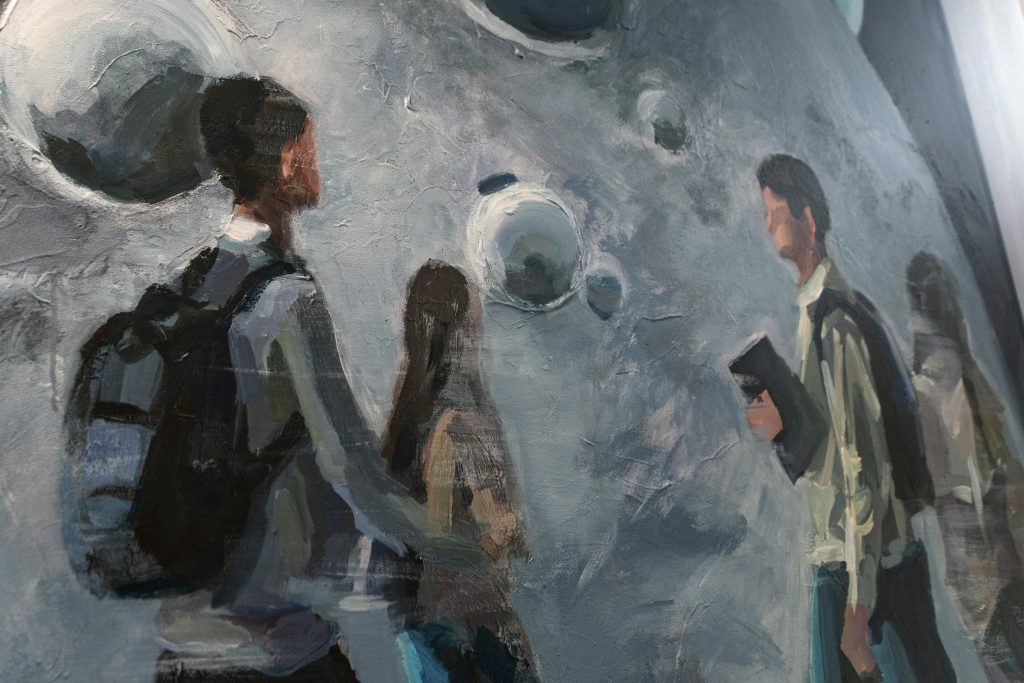
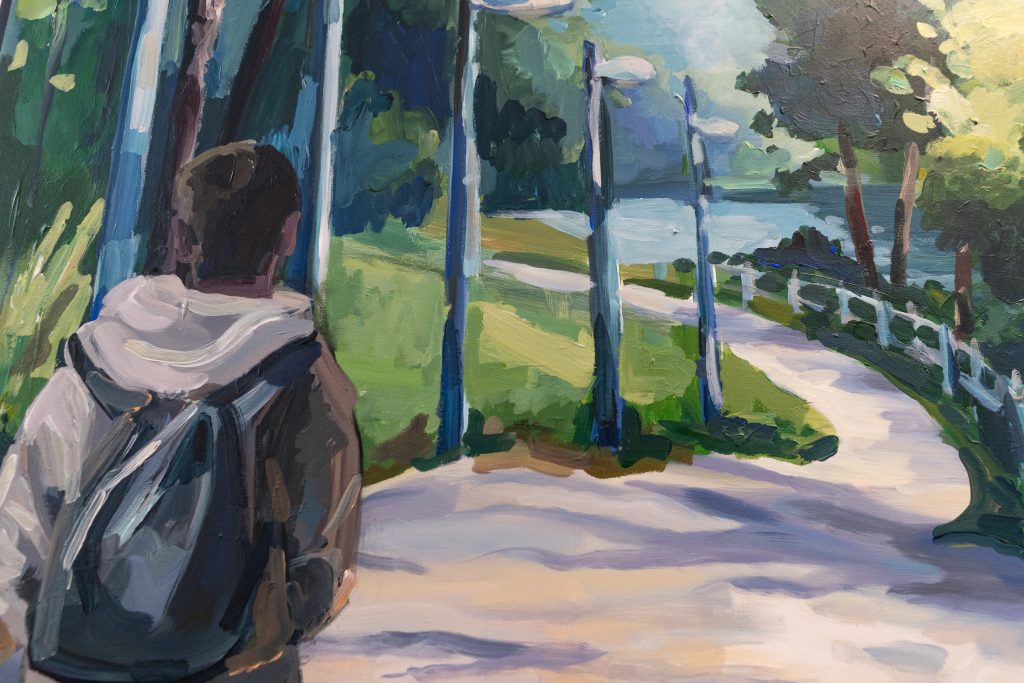
According to the artist, the first painting features recognisable elements of the Alytus landscape that she discovered while walking around the city. The second introduces a metaphor for science and discovery, inspired by an image of Earthrise captured during NASA’s ‘Artemis’ mission.
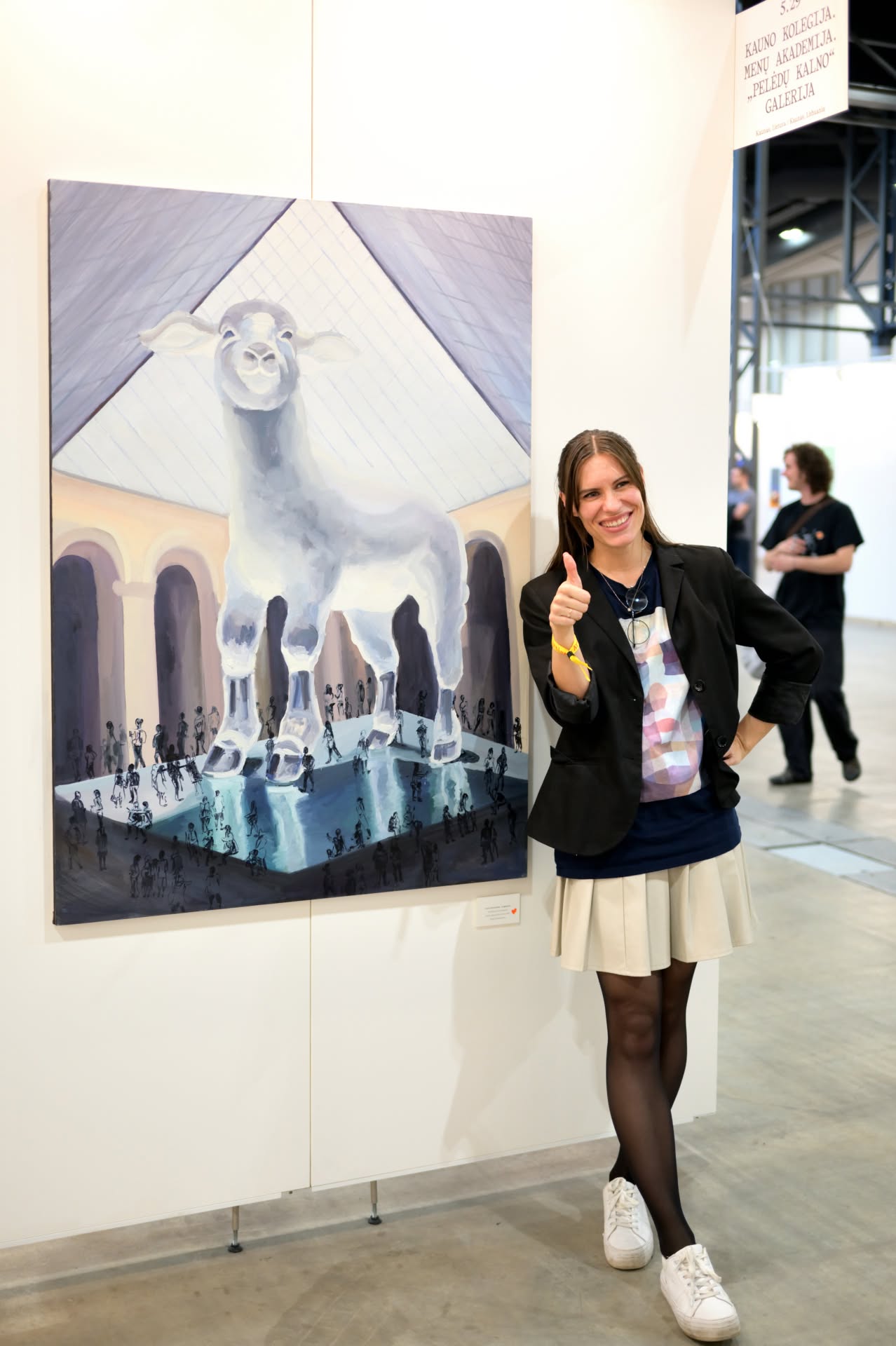
‘I was fascinated not only by the image itself but also by the significance of this event in the history of science. I wanted it to serve as a source of inspiration for students, reminding them that curiosity, the courage to explore and the desire to make new discoveries can open up possibilities that initially seem impossible,’ says the lecturer.
She adds that both paintings depict landscapes as though they were displayed in a gallery, with people observing the artworks.
‘I was interested in creating a kind of paradox: we, the viewers, are looking at paintings in which other viewers are also looking at works of art.’
This, the artist explains, creates several layers of observation and perception. As the paintings are displayed in a stairwell where people are constantly moving, she wanted to reflect this movement within the works themselves.
‘In one painting, a person stands still, observing the landscape, while in the other, people are depicted in motion – like passers-by blending into the actual movement taking place in the stairwell. I wanted to create a visual relationship in which the painted space seems to extend the real environment, making the boundary between depicted and actual movement less distinct,’ she explains.
Inspiration alone is not enough: what does an artist really need?
Reflecting on her creative process, the Kauno kolegija lecturer says she believes inspiration comes through the act of working.
‘An artist’s creative process begins long before they stand in front of a canvas. It involves constantly observing and reflecting on the environment, people and situations. I take a lot of photographs, capturing images that catch my attention, but later I filter them through my own experiences, values and emotional state at that particular moment,’ the artist explains.
She reveals that her work seeks to portray the psychological dimensions of the human condition through metaphors, symbols and unexpected visual associations.
‘What matters to me is not reproducing an image I have seen, but reinterpreting it and giving it new meaning. I usually have a clear starting point, but the original idea can change considerably during the painting process.’
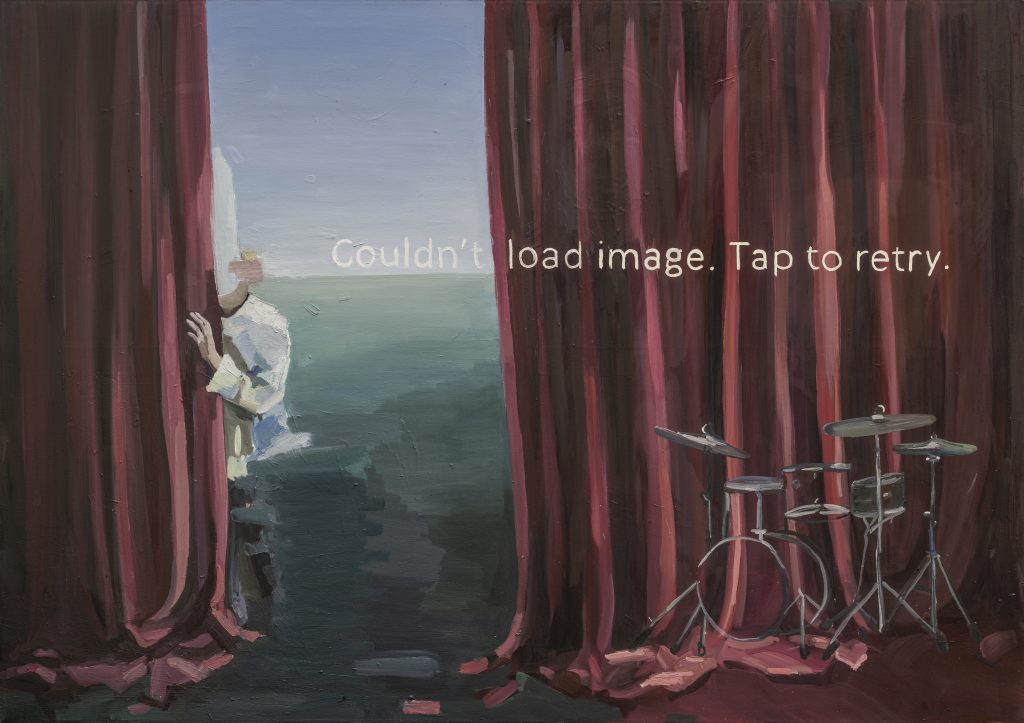
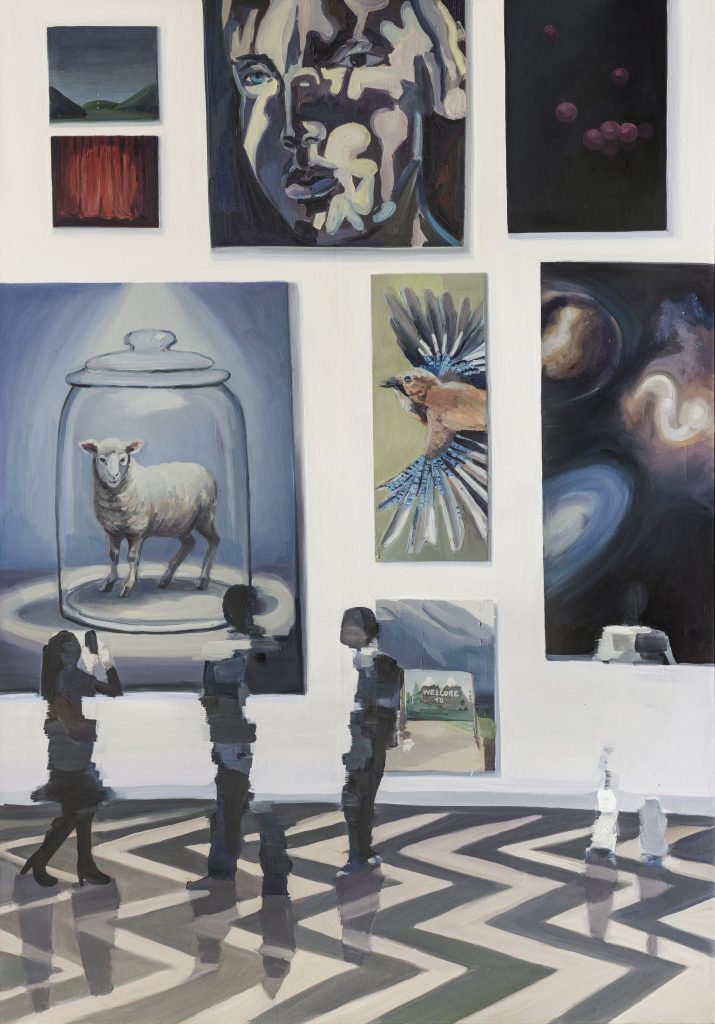
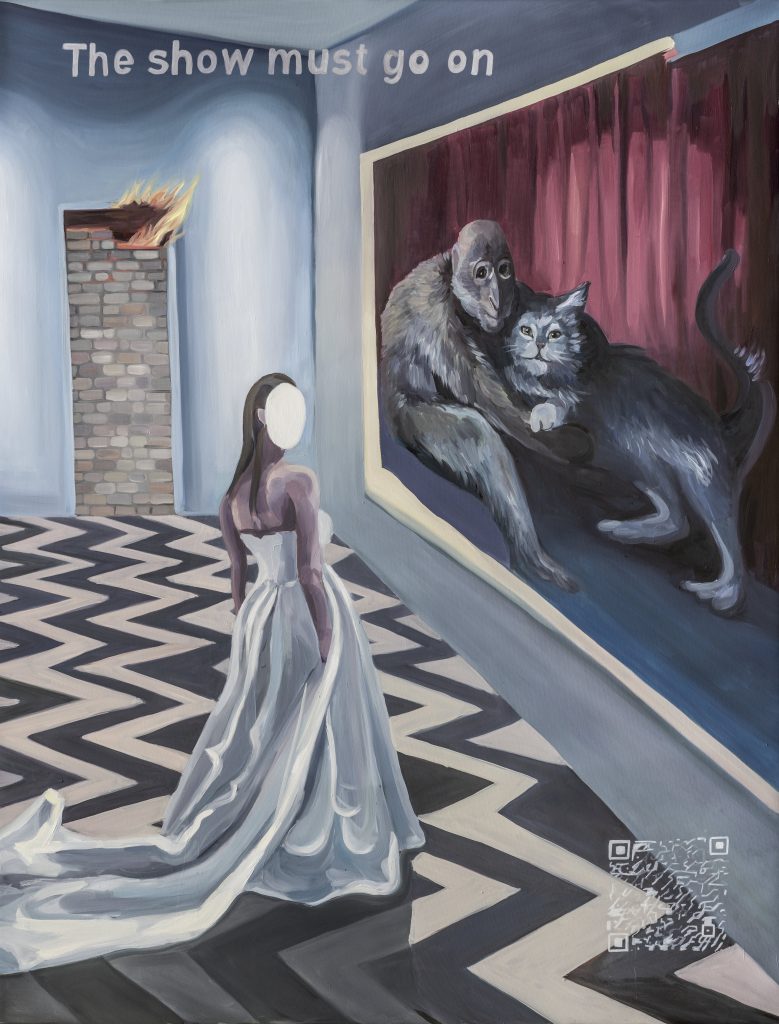
Slavinskaitė-Grigaitienė explains that, guided by intuition, she creates a sense of dreamlike unreality and complexity, where recognisable images intertwine with inner emotional states and imagination. Sometimes one painting naturally leads to another, gradually giving rise to new themes and entire series of works.
‘For example, the idea of a gallery space that I am exploring in one of my latest paintings also grew out of a concept I touched upon in an earlier work. I am continuing to develop this theme, and it will form part of a future exhibition,’ the artist says.
She adds: ‘It is very important to me to leave room for the unexpected in my creative work. Not everything can be planned in advance. Sometimes an idea that emerges during the process, one that was never part of the original concept, becomes a new direction and opens up unexplored creative possibilities.’
Many people imagine artists as absent-minded individuals, lost in thought and waiting for inspiration to strike. However, the Kauno kolegija lecturer believes that creativity alone is not enough. Discipline and consistency are equally important, as is the ability to keep working even when inspiration seems to be lacking or the results are not immediately satisfying.
‘To stay on this path, you need perseverance and patience, because painting is a long process that involves making mistakes, changing things and sometimes even starting again. It is important to remain endlessly curious about the world, to observe what is happening around you and not limit yourself to what you already know. You must not be afraid to experiment, take risks, make unexpected decisions and sometimes abandon your original idea,’ the artist says, challenging common stereotypes.
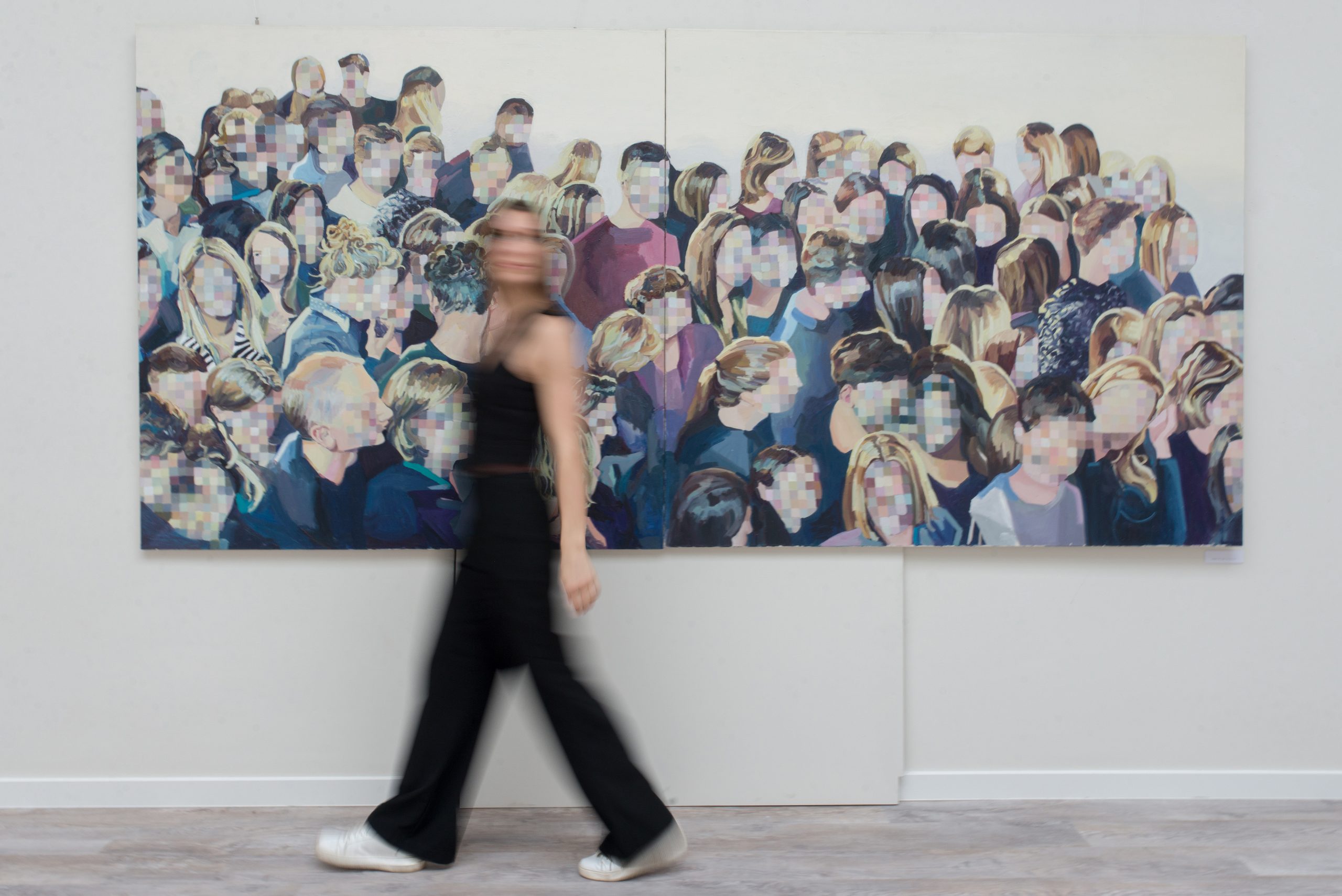
She also identifies self-criticism as an important personal quality for an artist – the ability to evaluate one’s own work without becoming trapped in constant doubt.
‘For me, it is important to be able to step away from a painting, leave it for a while and then return to look at it with fresh eyes. That distance allows me to assess what I have done more objectively and notice things that are no longer visible when I am working on it up close,’ she explains.
The final brushstroke is not the end of a painting’s story
Asked whether it is difficult to part with a painting when it goes to a new owner, the artist says she agrees with a comparison often made among artists: paintings are like their children.
‘After all, we nurture a work from the very first idea to the finished piece, experiencing all kinds of emotions along the way and becoming attached to it. So saying goodbye is certainly not always easy. There are some paintings that I keep for myself,’ she shares.
She has also noticed that as soon as she hangs a painting in her own home, it feels as though it becomes cemented into the wall. The emotional bond with the work grows even stronger, making the thought of parting with it increasingly difficult.
‘Sometimes I no longer want to sell a painting once it has been hanging in my home,’ she admits.
‘Nevertheless, I believe art is not created solely for the artist and should not remain in the studio. A work of art needs to encounter its audience, to be seen, to provoke thoughts and emotions, and to become part of someone’s everyday life. That is why I am always delighted when my paintings find their place in other people’s lives.’
The artist also reflects on the uncertainty surrounding a painting’s future. Although it may bring joy to its new owners for a time, there is no way of knowing what will happen to it in ten, fifty or a hundred years.
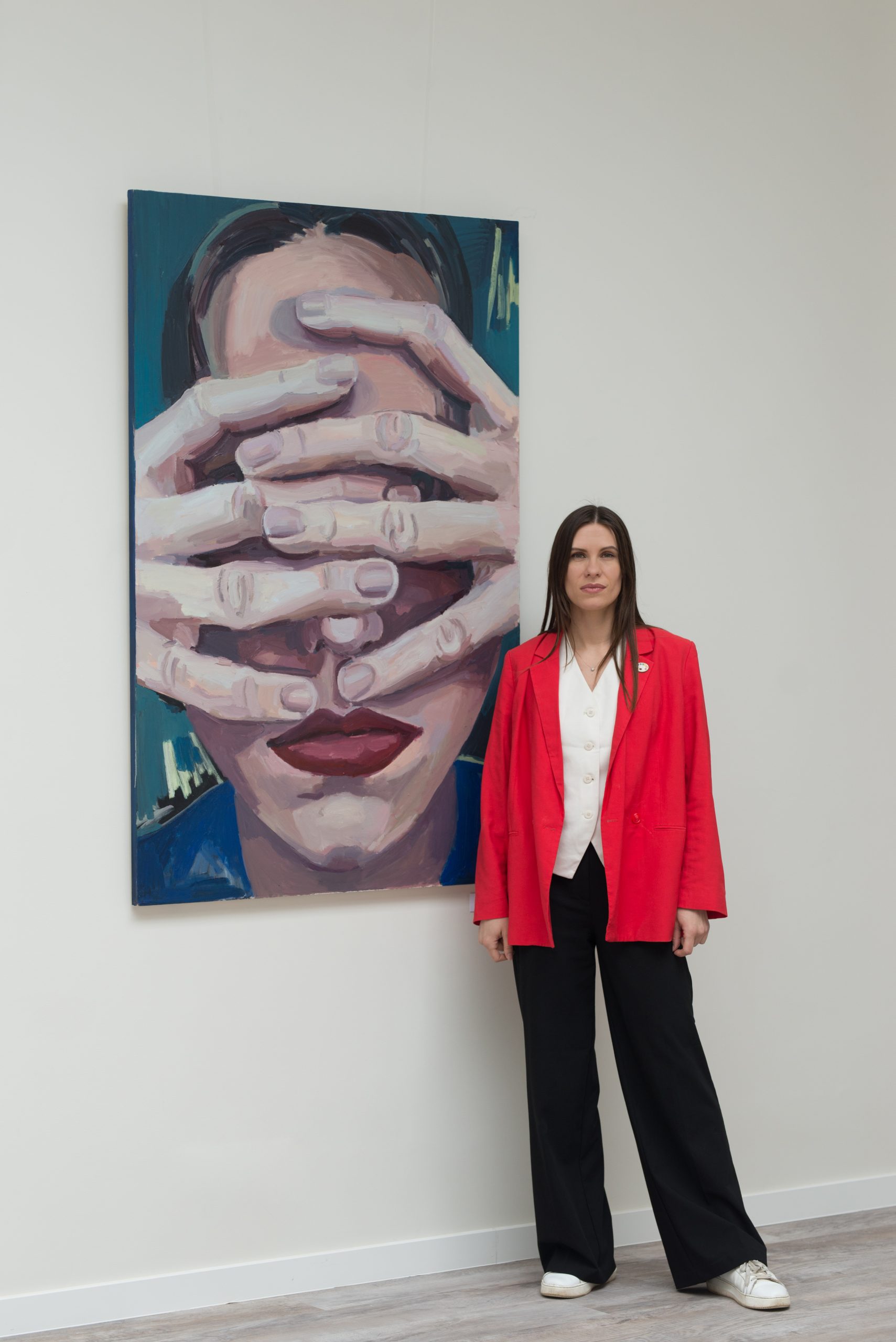
‘Perhaps it will end up in an attic, be painted over, destroyed or rediscovered entirely by chance. I find it fascinating to think about the impermanence of an artwork – after all, even the works being created today will not necessarily survive for future generations,’ she reflects.
She also explains that the emotional attachment is somewhat different when working on private commissions or creating artworks for public spaces.
‘From the very beginning, I know which space the work is intended for. And if it is a public space, I can always return and see it again. I also like the fact that such a work is not confined to a single home or owned by just one family – many different people can see and experience it,’ says the Kauno kolegija lecturer.