Representatives of the Ministry of the Economy and Innovation visit Kauno kolegija
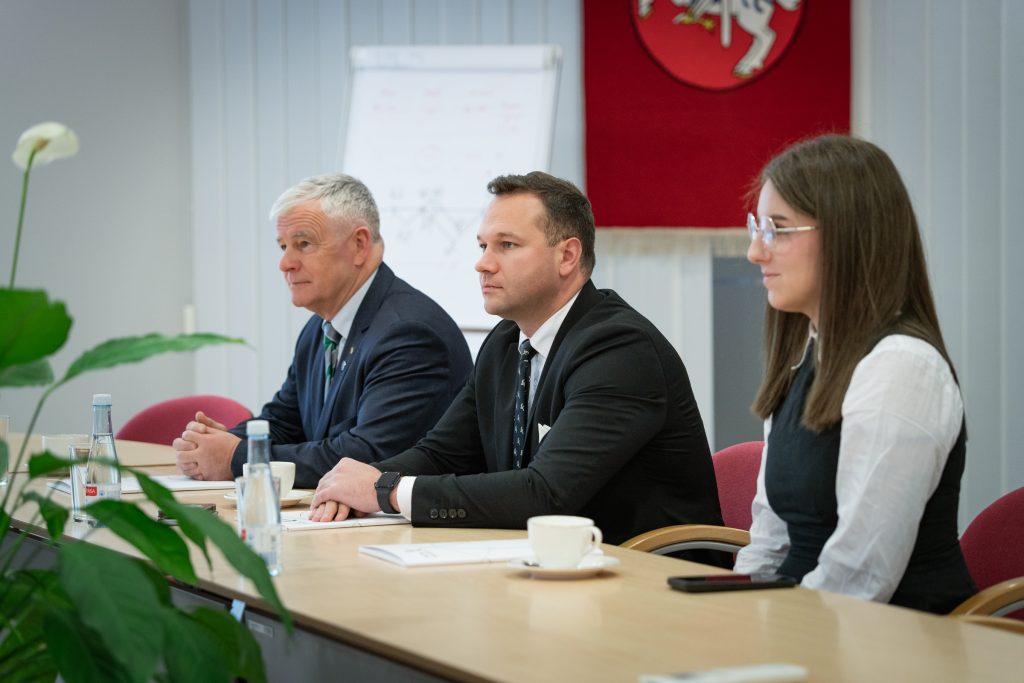
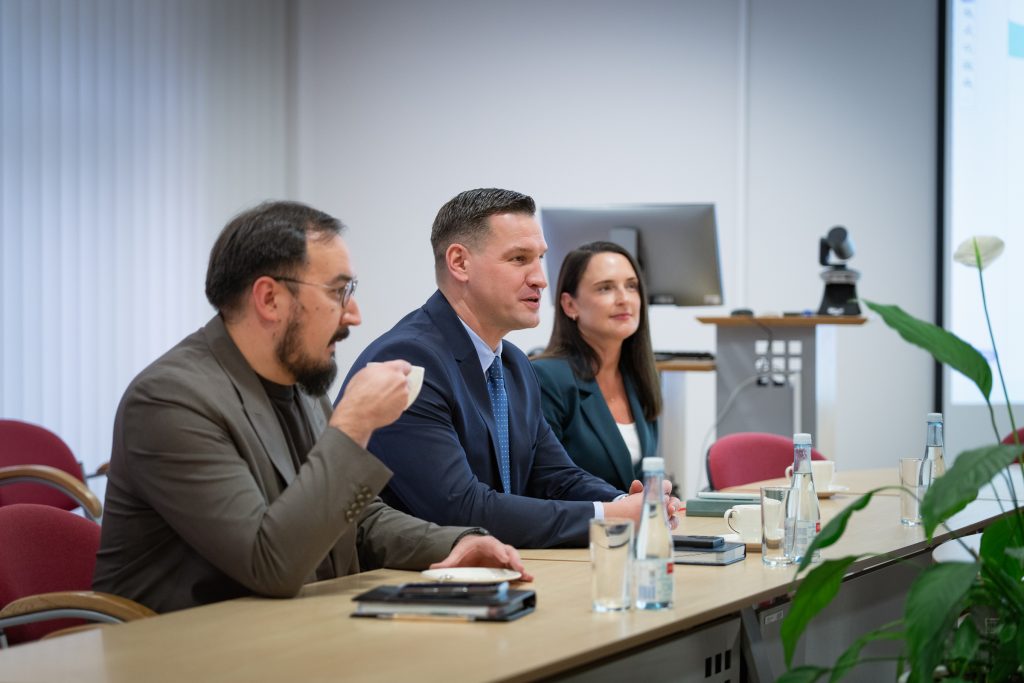
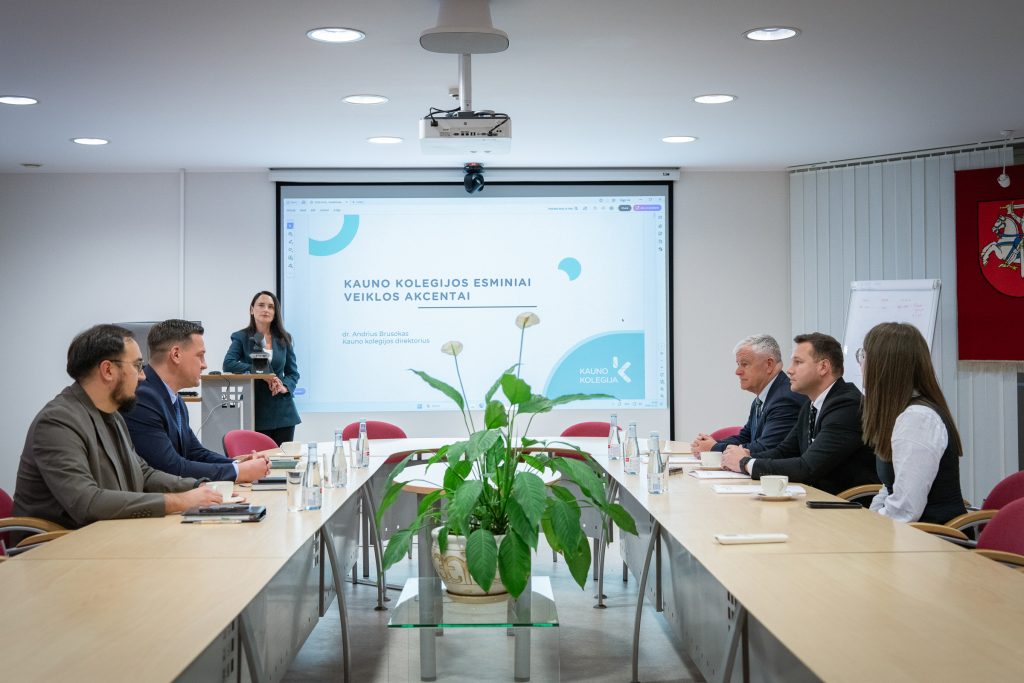
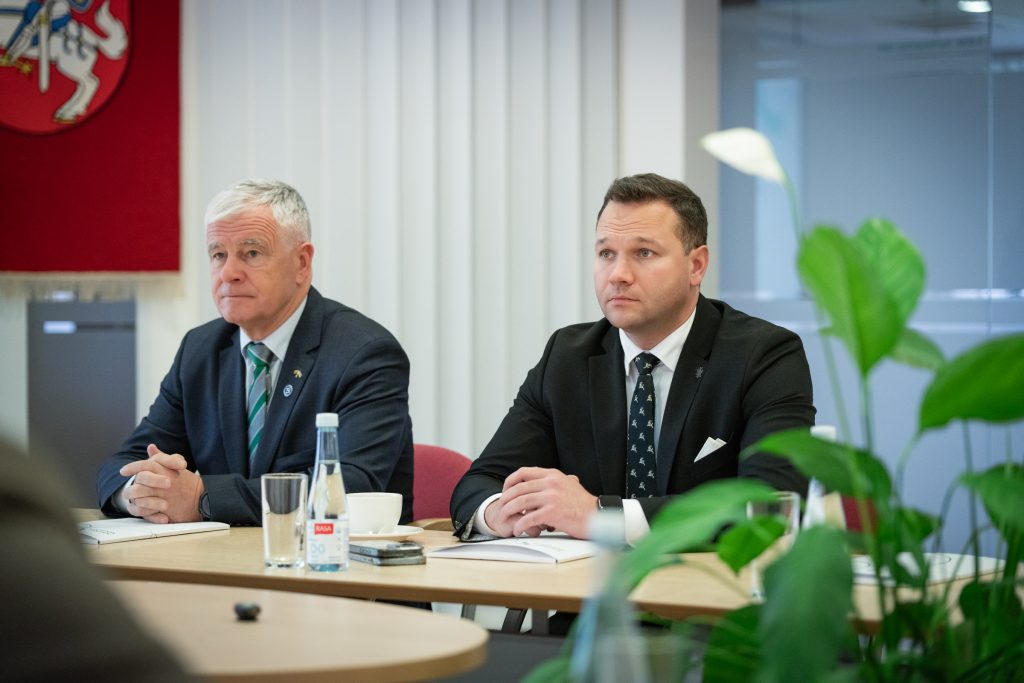
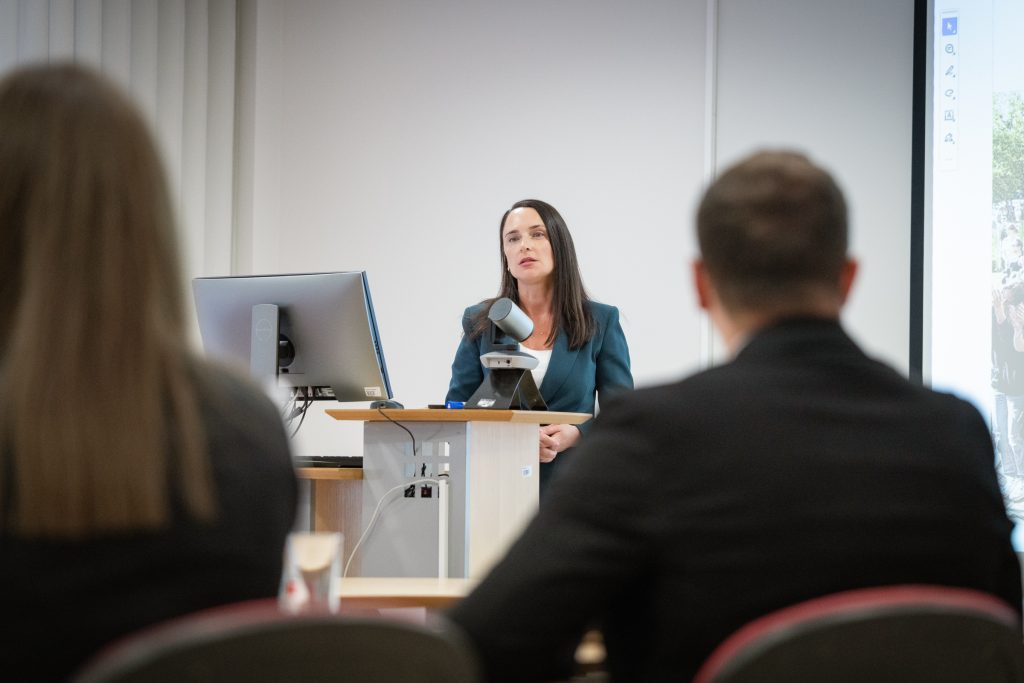
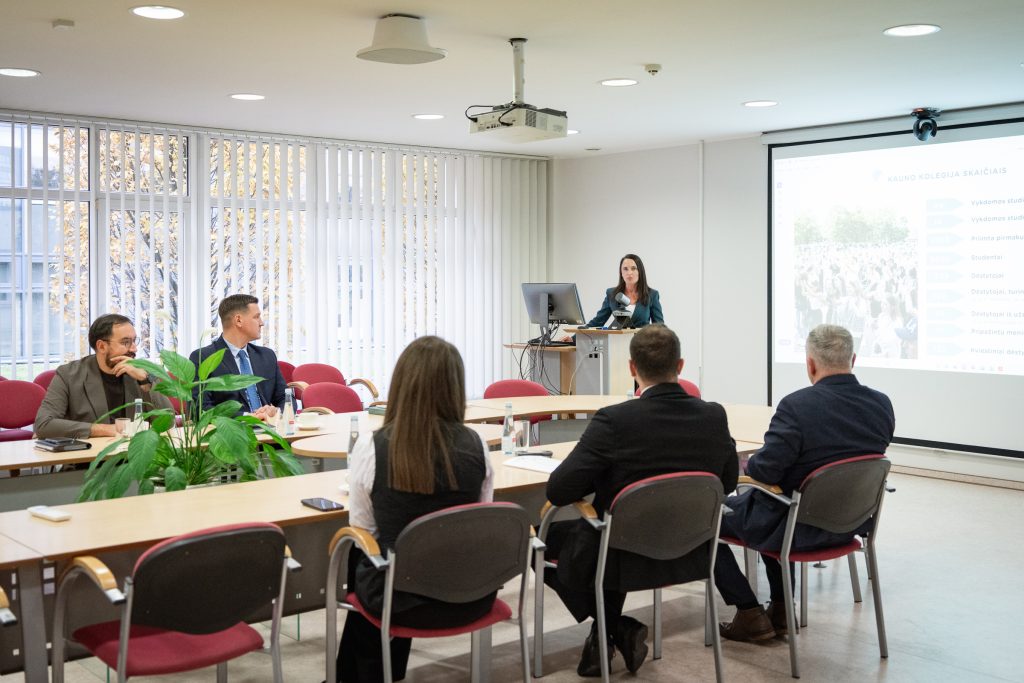
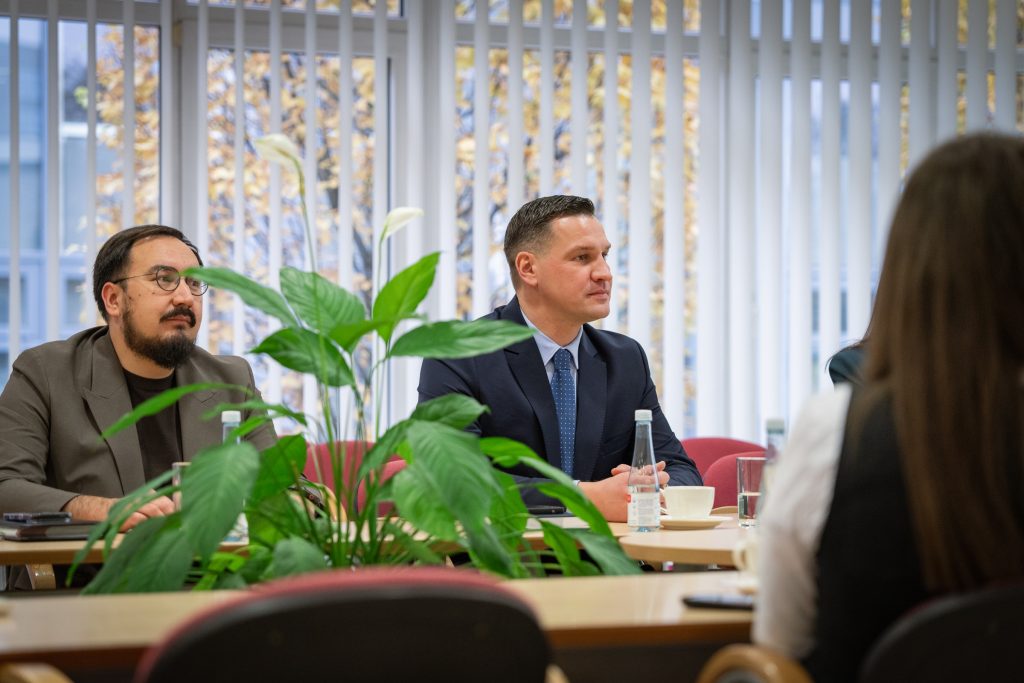
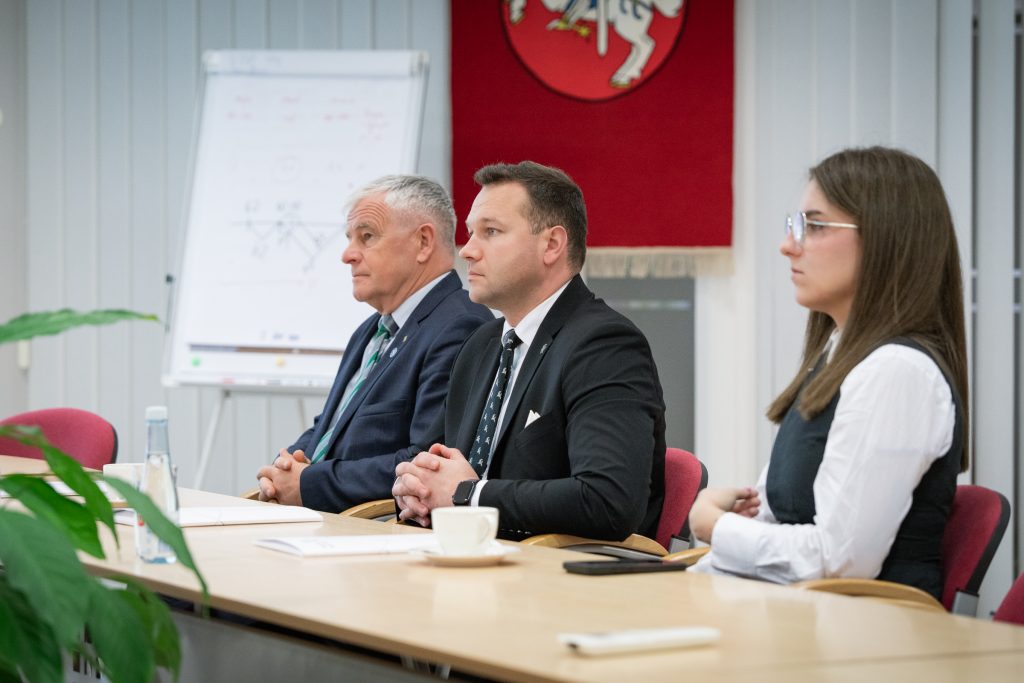
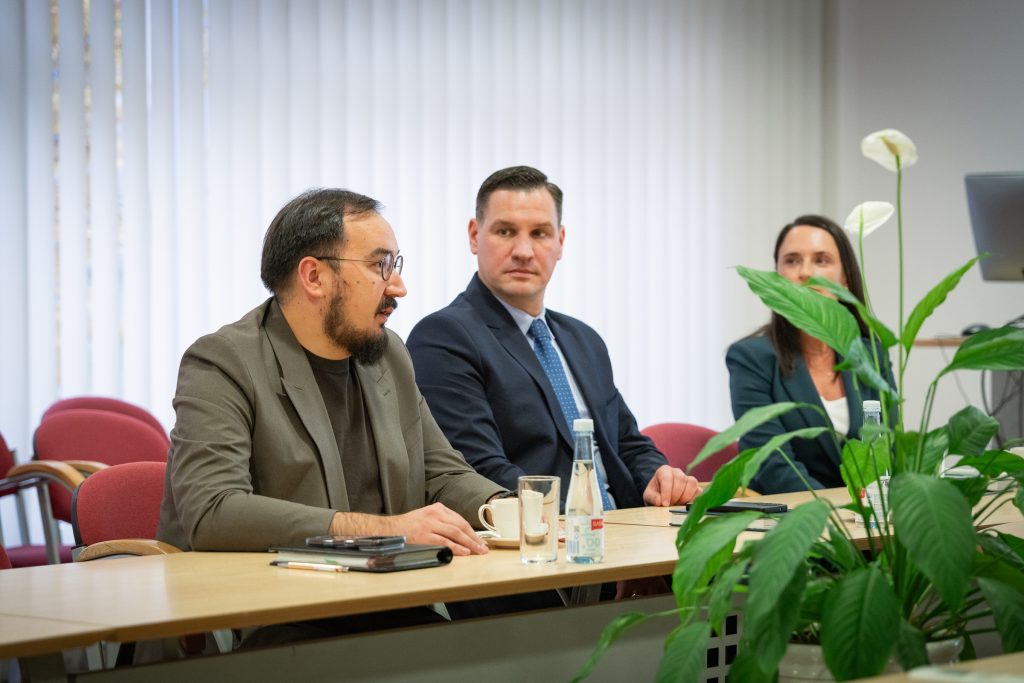
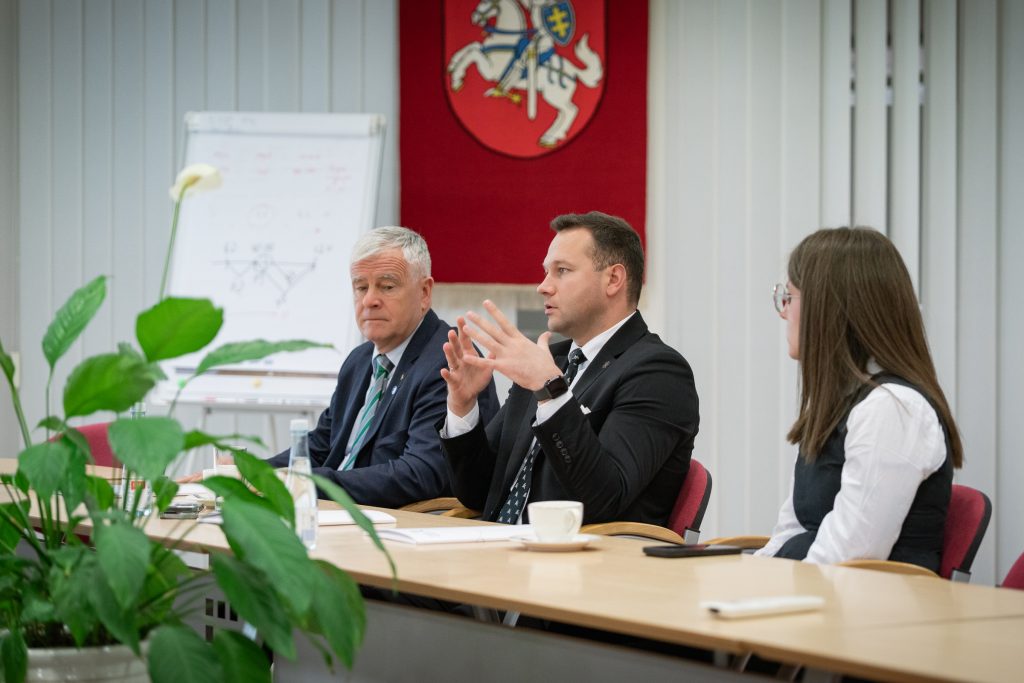
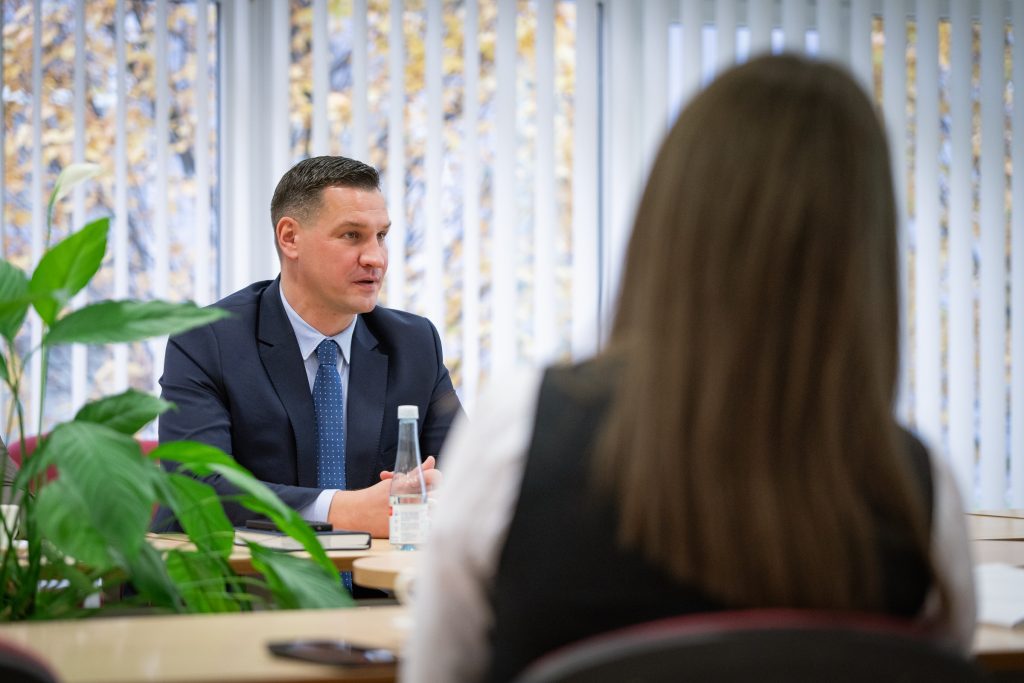
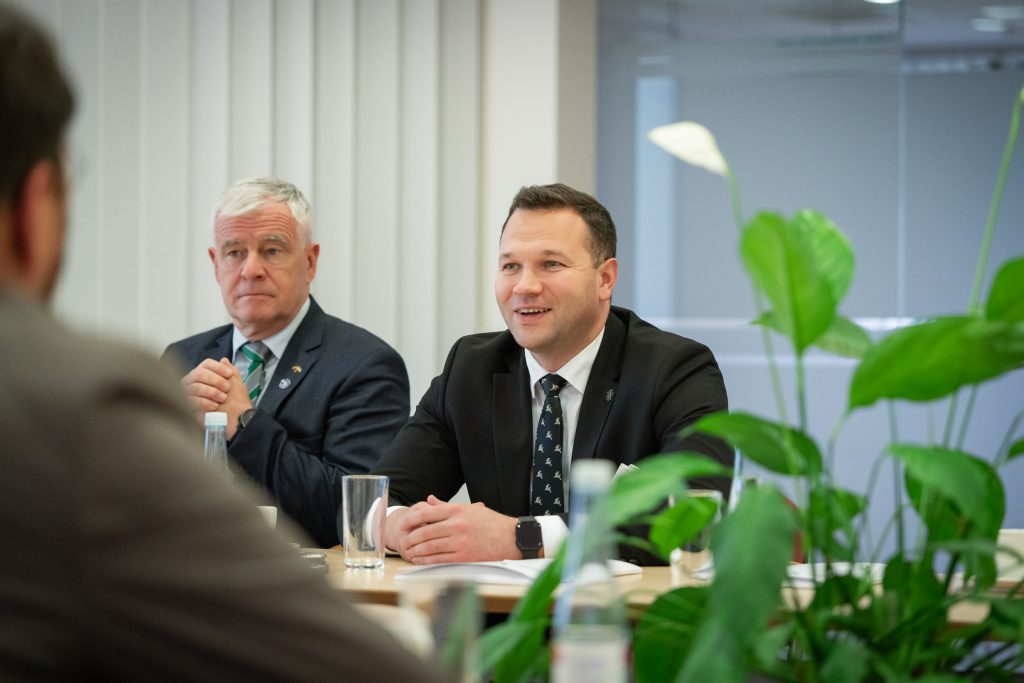
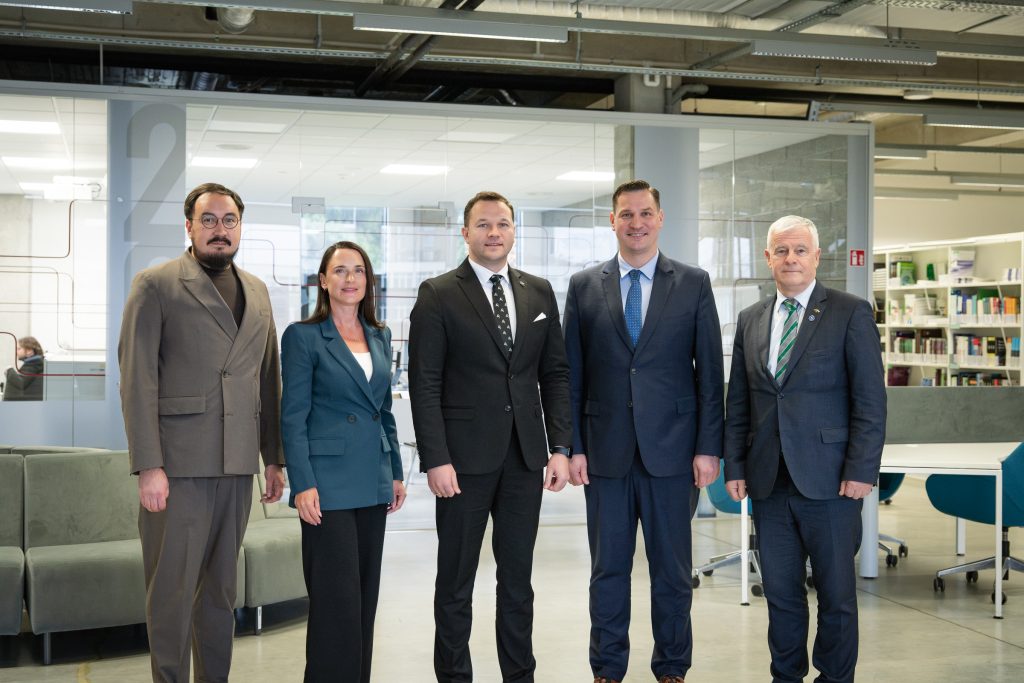
On 11 November, Dr Andrius Brusokas, Director of Kauno kolegija, Dr Inga Stravinskienė, Vice Director for Research and Development, and Dr Tomas Makaveckas, Dean of the Faculty of Computing, Engineering and Technologies, met with Edvinas Grikšas, Minister of the Economy and Innovation, his adviser Jonas Jarutis, and Goda Vileikytė.
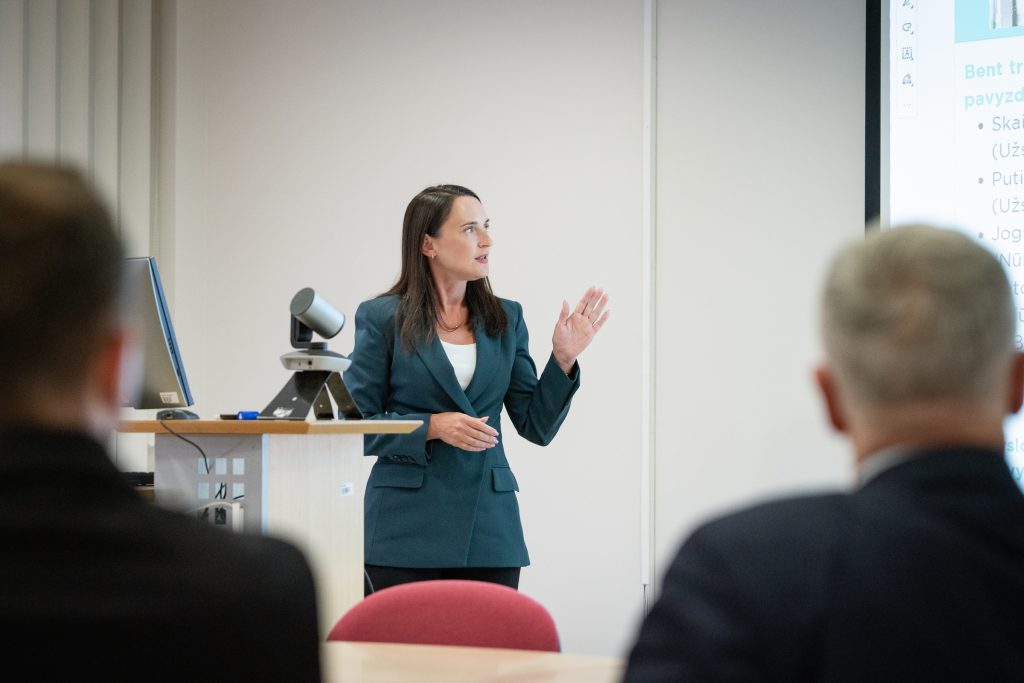
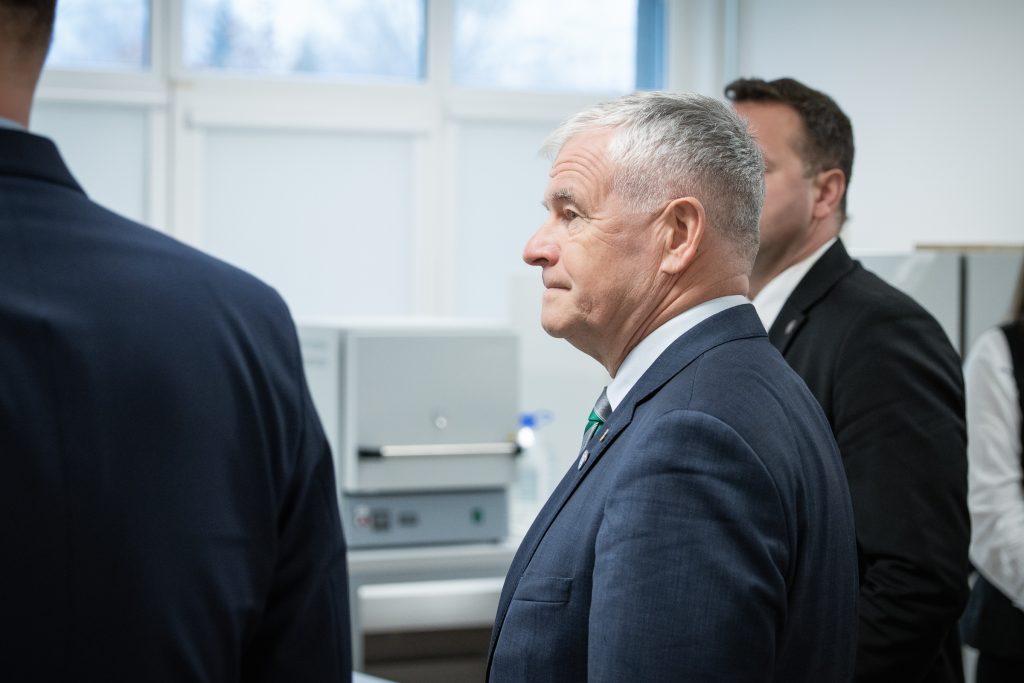
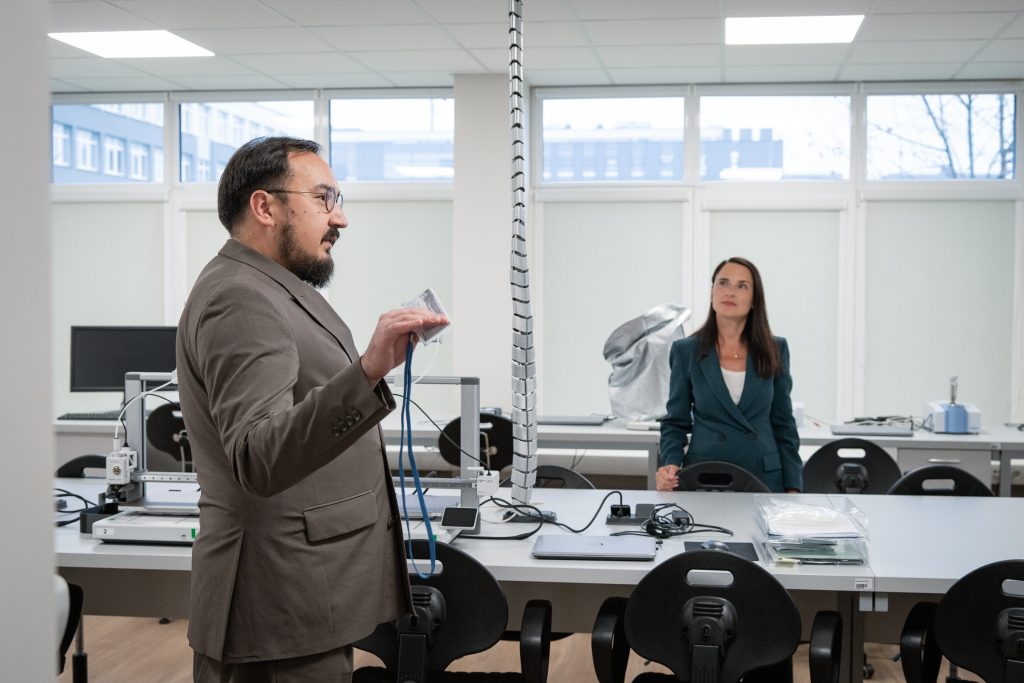
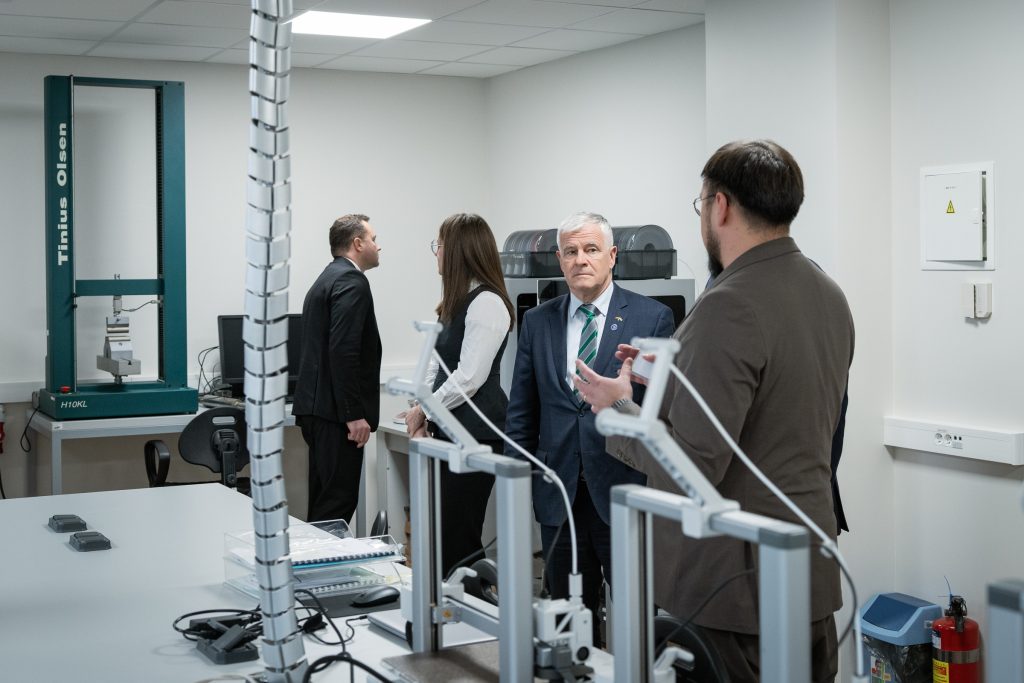
During the visit, the Ministry’s representatives were introduced to Kauno kolegija, its main areas of activity, study programmes and examples of successful collaboration. They were also given a tour of the academic campus on Pramonės Avenue. Discussions focused on the potential of applied research and cooperation with Lithuania’s regions.
From regional development to university of applied sciences status
‘Kauno kolegija has academic units in three cities – Kaunas, Alytus and Tauragė. Thanks to targeted investment from the Recovery and Resilience Facility (RRF), we recently opened the Centre of Excellence in Food and Healthy Lifestyle in Alytus, which has become a distinctive asset for the region. In Tauragė, meanwhile, we have established strong links with the municipality, and students are offered scholarships to encourage them to remain in the region and choose study programmes that meet local needs,’ said Dr A. Brusokas during the meeting.
Dr I. Stravinskienė emphasised that the sector is an equally important and integral part of higher education, offering practice-oriented studies underpinned by applied research and artistic activities.
‘We are a major employer and the first choice among applicants in Kaunas, not only when compared with other higher education institutions in the city. One of our immediate ambitions is to become a university of applied sciences, following the models established in countries such as Finland and Germany, where professional Master’s degree programmes are also offered,’ explained Dr I. Stravinskienė.
The meeting also provided an opportunity to present the Logistics and Cybersecurity Centre of Excellence, which is currently under development, the lifelong learning platform and examples of collaboration between academia and business.
The Director and the Minister’s team also discussed potential European Union (EU) funding opportunities for higher education in 2028–2034, including investment in upgrading research infrastructure. Minister E. Grikšas highlighted that, at EU level, the main priorities would be improving competitiveness, commercialisation and translating research and experimental development (R&D) results into start-ups, business applications and patents.
‘In the future, funding will be directed towards partnerships between academia and business, technology transfer centres, patents, start-ups and spin-offs. Higher education institutions like Kauno kolegija have an enormous role to play here because of their close links with practical applications,’ emphasised E. Grikšas.
Study programmes responding to labour market needs
Dr T. Makaveckas, Dean of the Faculty of Computing, Engineering and Technologies, discussed changing trends in applicants’ preferences.
‘Although the Software Systems study programme saw a decline in applications this year, interest in the Cyber Systems and Security programme increased,’ he noted.
The Dean also welcomed the strong interest in programmes such as Green Energy Engineering, Cyber Systems and Security , and Automation and Robotics, all of which have filled their available places.
During the meeting, Dr I. Stravinskienė also highlighted one of Kauno kolegija’s key strengths: the opportunities for interdisciplinary collaboration in both studies and applied research and artistic activities.
‘This enables us to conduct interdisciplinary applied research and develop products that draw on expertise from different fields,’ she explained.
The discussion also addressed the development, attraction and retention of talent in Lithuania, particularly in the regions. Participants emphasised that the concept of talent should not be limited to exceptional academic ability. It is equally important to develop specialists capable of applying advanced technologies, implementing innovations and creating high added value.
It was also noted that targeted funding measures can play a significant role in attracting talented students to the regions and encouraging them to remain there. Representatives of Kauno kolegija observed that targeted scholarships were already having a positive impact on applicants’ decisions to study outside major cities.
‘We are very pleased that the Ministry of the Economy and Innovation provides targeted scholarships for students studying in the regions. In our case, we are already seeing a positive impact on the Cyber Systems and Security study programme in Alytus, where a considerable number of students receive these scholarships and the programme is attracting strong interest from applicants,’ said Dr I. Stravinskienė.
Minister E. Grikšas stressed the growing demand for highly qualified specialists in Lithuania’s regions.
‘For example, in the Šalčininkai district, lettuce is grown in greenhouses using drones and artificial intelligence, creating a need for specialists who can operate automated systems. In the Kupiškis district, innovative honey products are being developed and exported to Japan and New Zealand. Businesses like these need skilled employees, and higher education institutions play a central role in meeting that demand,’ he said.