FoodHealth is an interdisciplinary platform for applied research, technology and partnerships, bringing together expertise in food technology, health sciences, biotechnology and other fields.
At the Centre, researchers from different disciplines collaborate with partners from business, the public sector and academia to develop solutions to current challenges related to food systems, nutrition, human health and sustainability.
The activities of the Centre are based on the principle that today’s food and health challenges extend beyond the boundaries of a single scientific discipline. Food quality and biological value, the properties of raw materials, production technologies, microbiological safety, biological processes in the human body, environmental impact and the efficient use of resources are all interconnected. FoodHealth therefore brings together expertise from different fields and advanced research infrastructure to develop comprehensive, science-based solutions with practical applications.
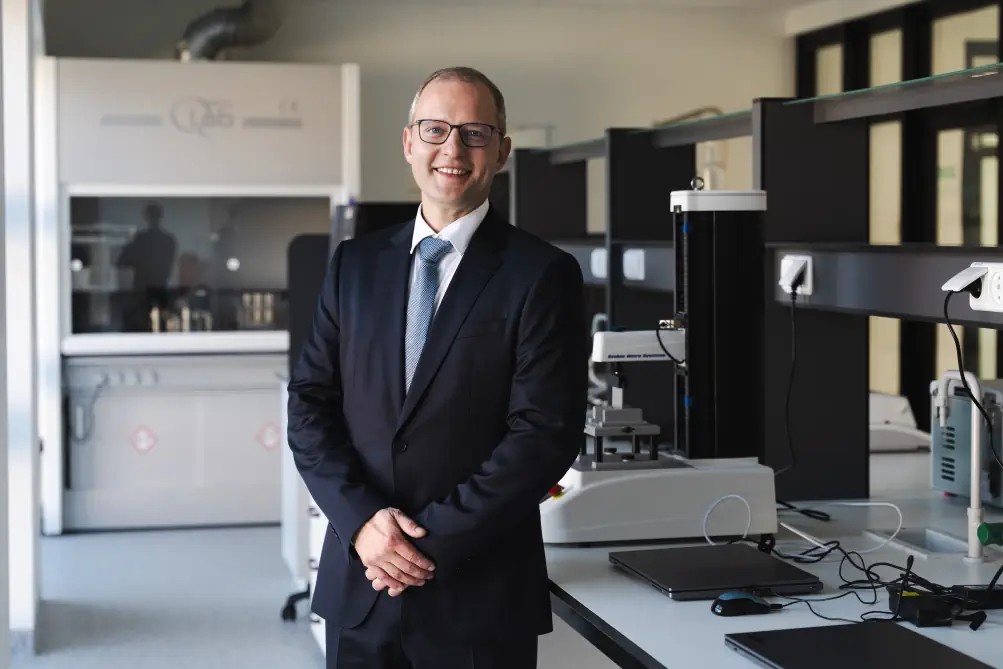
Dr Karolis Gedvilas
Head of the Centre of Excellence in Food and Healthy Lifestyle “FoodHealth”
Address: 17 Studentų St., Alytus, Room 305
Tel.: +370 601 32040
Email: karolis.gedvilas@kaunokolegija.lt

About „FoodHealth“
The aim of FoodHealth is to develop applied research and innovation in the fields of food, nutrition, health technologies and healthy lifestyles, and to create the conditions for new knowledge to be transformed into tangible products, technologies and solutions.
The Centre brings together expertise in food technology, biotechnology, molecular biology, genetics, microbiology, immunology, cell biology, chemistry, analytical methods, nutrition, environmental science, digitalisation and other fields. This interdisciplinary model makes it possible to examine not just isolated processes but their interactions – from raw materials and their growing conditions to product composition, biological value, safety, health effects and sustainable production processes.
What Do We Research?
Sustainable agri-food systems.
Research covers different stages of the food system – from the cultivation of raw materials and the assessment of their properties and quality to processing, production, packaging, storage and analysis of the final product. The Centre seeks solutions that enable more efficient use of raw materials, technologies and other resources, improve process efficiency, and contribute to more sustainable and resilient agri-food systems.
Health-promoting foods with high biological value.
Expertise in food science, nutrition, biology and health sciences is integrated to investigate food raw materials, their chemical and biological properties, valuable components and potential applications. Research findings can be used to develop or improve food products, their composition and production technologies, as well as to explore new science-based solutions for healthier nutrition.
Health technologies and molecular, genetic and immunological research.
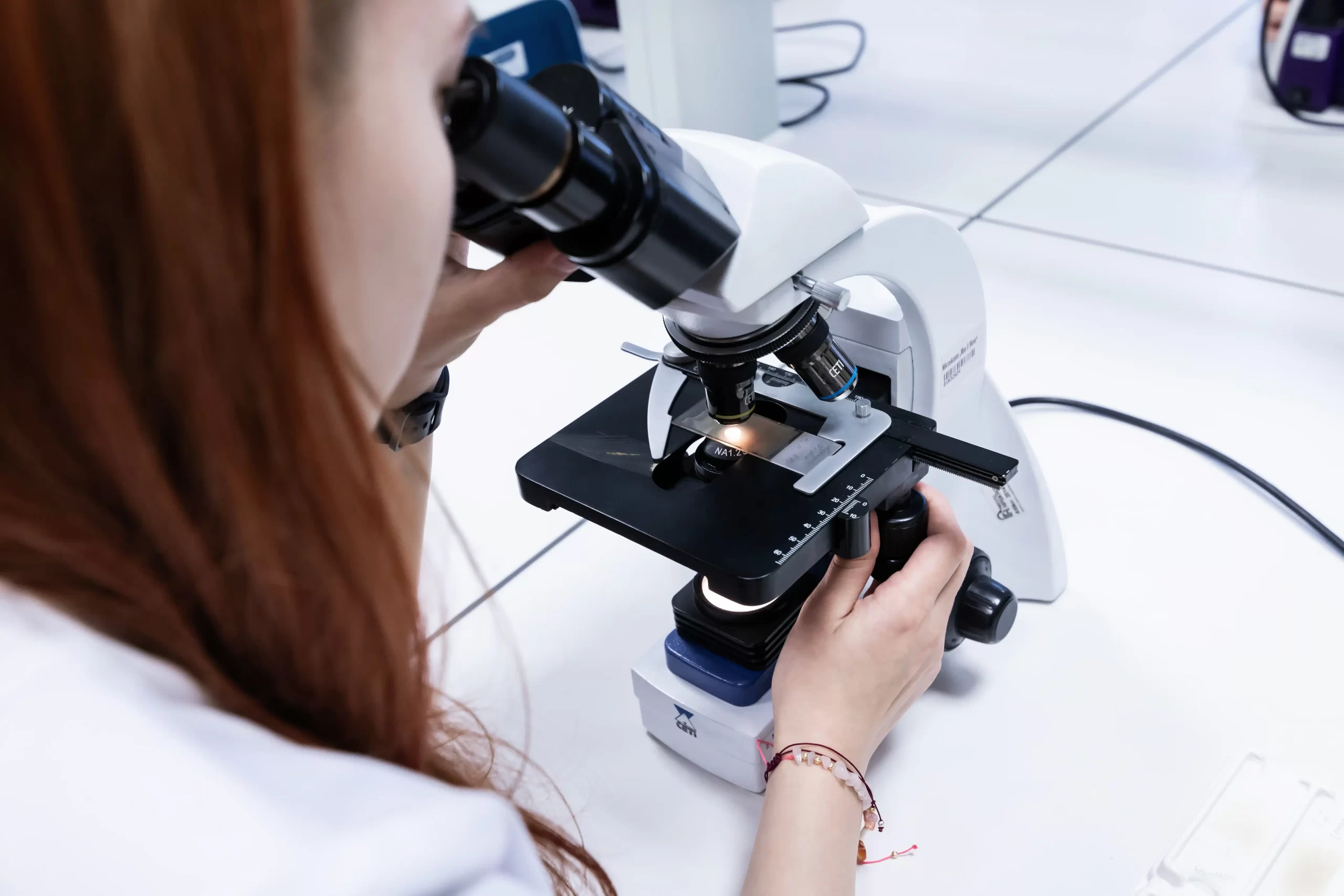
This research area complements studies of food and healthy lifestyles with the analysis of human biological processes. The Centre carries out the isolation of genomic DNA, mitochondrial DNA (mtDNA), total RNA and messenger RNA (mRNA), as well as genotyping, the identification of genetic variants and gene expression analysis. Immunological research capabilities include the determination of hormones and specific IgG, IgM, IgA and other immunoglobulins, as well as serological testing for infectious diseases, allergen testing and autoimmune testing. These research capabilities provide a basis for interdisciplinary projects in which food, nutrition or lifestyle factors can be investigated in relation to biological and molecular markers.
Microbiological, cellular and biochemical research.
Microbiological research is conducted to determine the microbiological characteristics of samples, assess the prevalence and quantity of microorganisms, control microbiological contamination, and address scientific and applied research objectives. Cell research infrastructure enables the assessment of cell morphology and fluorescence-based analysis. Automated analytical systems make it possible to investigate metabolic products, electrolytes, biomembrane synthesis precursors, secondary metabolites and cell culture toxins.
Advanced chemical and instrumental analysis.
The analytical capabilities of the Centre enable comprehensive analysis of the chemical composition of raw materials, food products, biological and other samples. Gas chromatography-tandem mass spectrometry (GC-MS/MS) enables comprehensive analysis of volatile and semi-volatile organic compounds, including their separation, identification, structural characterisation and quantitative determination. These capabilities support research into food quality and safety, biological processes, metabolites and other areas of applied research.
Sustainable use of resources and advanced technological processes.
Research addresses issues of environmental protection, energy, the use of raw materials and waste management, seeking ways to use resources within the food system more efficiently, sustainably and responsibly. The Centre also explores the potential applications of automation, digitalisation and advanced technologies – from process monitoring and data analysis to robotic sorting and smarter management of production processes.
Bridging Food Technology and Health Sciences
One of the key distinguishing features of FoodHealth is the ability to approach food and health research not as two separate fields but as an interconnected research system.
This makes it possible not only to investigate how to produce higher-quality, safer products with higher biological value, but also to examine their composition and biological properties in greater depth and explore their links with processes occurring in the human body. By complementing expertise in food technology with methods from molecular biology, genetics, immunology, microbiology, cell research and advanced chemical analysis, the Centre creates an environment for comprehensive interdisciplinary research and new opportunities for collaboration.
This approach brings raw materials, technological processes, final products, their biological value and health-related indicators together within a single research ecosystem.
How Does Collaboration Work?
FoodHealth focuses not only on conducting research but also on solving problems together. Collaboration begins with a specific question or challenge and continues until a practical result is achieved:
- We discuss the problem or idea. We identify the need, research question or technological challenge.
- We bring together the required expertise. Depending on the problem, we assemble specialists from relevant fields and develop a research or experimental development plan.
- We conduct research and test solutions. We use the Centre’s laboratory, analytical and technological infrastructure and apply the most appropriate research methods.
- We turn knowledge into a practical result. We seek to apply research findings in developing or improving products, processes, technologies and services, or preparing new R&D projects.
Not sure what type of research you need? Collaboration can begin with a problem, an idea or a question – together, we identify the most appropriate research approach and work towards the right solution.
Who is „FoodHealth“ for?
Businesses. Companies in the food, agri-food, biotechnology, health technology and related sectors seeking to develop or improve products, test technologies, conduct specialised research, substantiate new ideas with scientific data, or work with researchers to address specific technological challenges.
Public sector. Institutions and organisations addressing issues related to food, nutrition, public health, healthy lifestyles, sustainability and regional development, and seeking a partner in applied research.
Researchers and research partners. Lithuanian and international higher education and research institutions and research groups seeking to combine expertise from different fields, access advanced research infrastructure, conduct interdisciplinary research, and jointly develop national and international R&D projects.
From Knowledge to Practical Impact
In contemporary research, value is created not only by new knowledge but also by the ability to combine, test and apply that knowledge to solve real-world problems.
FoodHealth aims to be a space where food technology and health sciences come together for a common purpose – to develop science-based solutions for safer and higher-value food, more sustainable agri-food systems, more advanced health technologies and a healthier society.
Here, expertise from different fields, modern research infrastructure and partnerships are integrated into a single system – from a research question to a practical result.
The project is implemented under Progress Measure No. 12-003-03-04-02 “Ensure Effective Management of the Higher Education and Research System” of the Education Development Programme of the Ministry of Education, Science and Sport of the Republic of Lithuania and is funded under the 2021–2027 European Union Funds Investment Programme and/or the Economic Recovery and Resilience Plan “New Generation Lithuania”, i.e., with funding from NextGenerationEU.