
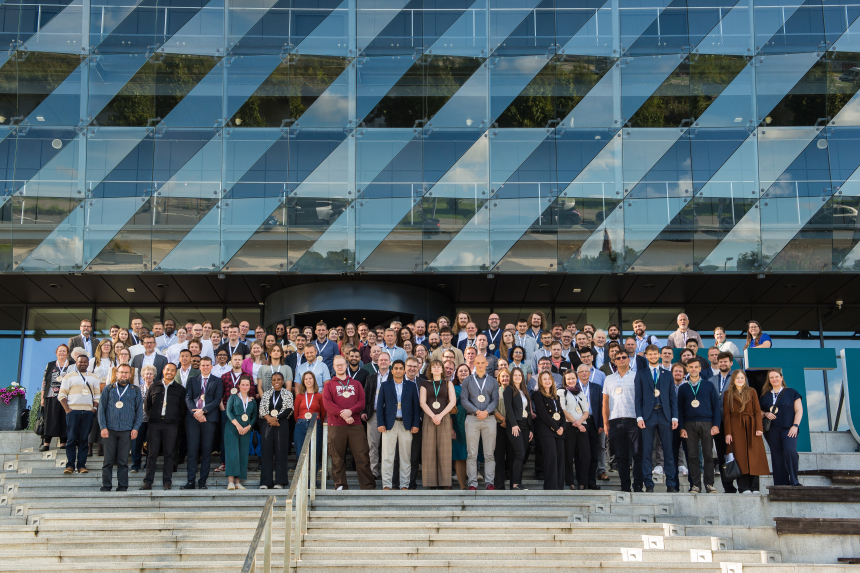
Wood science and engineering researchers and industry representatives meet in Riga
On 15–16 September, Riga hosted the 22nd annual conference of the Wood Science and Engineering (WSE 2026) network. The event was organised by the Latvian State Institute of Wood Chemistry (LSIWC) in cooperation with Riga Technical University (RTU). The conference brought together 144 participants from 19 countries, including scientists, researchers, engineering professionals and representatives of the wood industry.
Over the course of the two-day event, 58 oral presentations and 31 poster presentations were delivered, providing an opportunity to share the latest research findings, technological insights and ideas about the future of the wood sector in a rapidly changing world.
Focus on science, innovation and industry needs
At the opening of the conference, participants were welcomed by Tālis Juhna, Rector of Riga Technical University; Liene Levada, representing the Latvian Ministry of Education and Science; and Māris Būmanis, Member of the Board of Latvian company Latvijas Finieris.
The practical importance of cooperation between science and business was highlighted in a presentation by Jānis Švedas, Chief Financial Officer of ZAZA Timber, who discussed the role of research and development (R&D) in creating business value. This topic became an important part of the conference, highlighting the need to closely align scientific knowledge and innovation with the real needs of industry.
This year’s conference theme was ‘The Life Cycle of Wood in a Rapidly Changing World’. Particular attention was paid to how the entire life cycle of wood – from tree cultivation and raw material preparation to its use and subsequent recycling – can be adapted to climate change and other contemporary challenges.
From tree cultivation to the circular economy
The conference presentations and discussions covered three key stages of the wood life cycle.
In the area of wood production, considerable attention was devoted to the impact of climate change on forests and forestry. Discussions focused on ways of enhancing forest resilience and adapting to risks such as wildfires, storms and the spread of pests, as well as on the selection and cultivation of more resilient tree species.
In the area of wood utilisation, the main focus was on the use of wood in construction, its biological durability, protective coatings and the development of new bio-based raw materials. Researchers presented solutions aimed at improving the durability, functionality and sustainability of wood products.
At the end-of-life stage, particular attention was given to wood waste management, recycling and the recovery and reuse of resources. Discussions addressed more efficient resource use, the application of circular economy principles, and opportunities for carbon dioxide capture and storage.
The conference also showcased modern methods and technologies used in wood research, including artificial intelligence and deep learning solutions, X-ray computed tomography and hyperspectral analysis. The application of these methods opens up new opportunities for more accurate assessment of wood properties, analysis of its structure, and the development of more advanced solutions for wood processing and utilisation.
Contribution from Kauno kolegija researchers
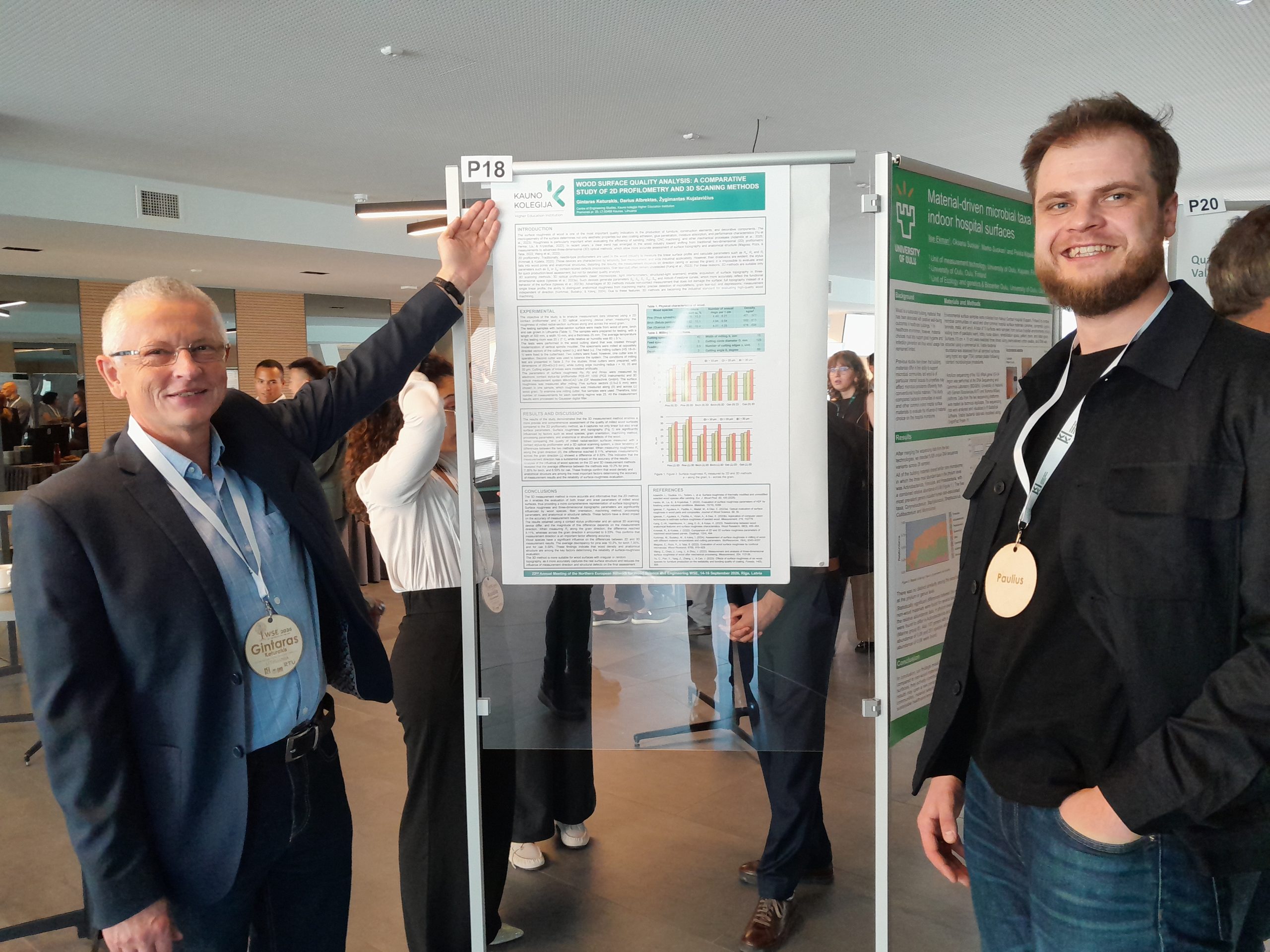
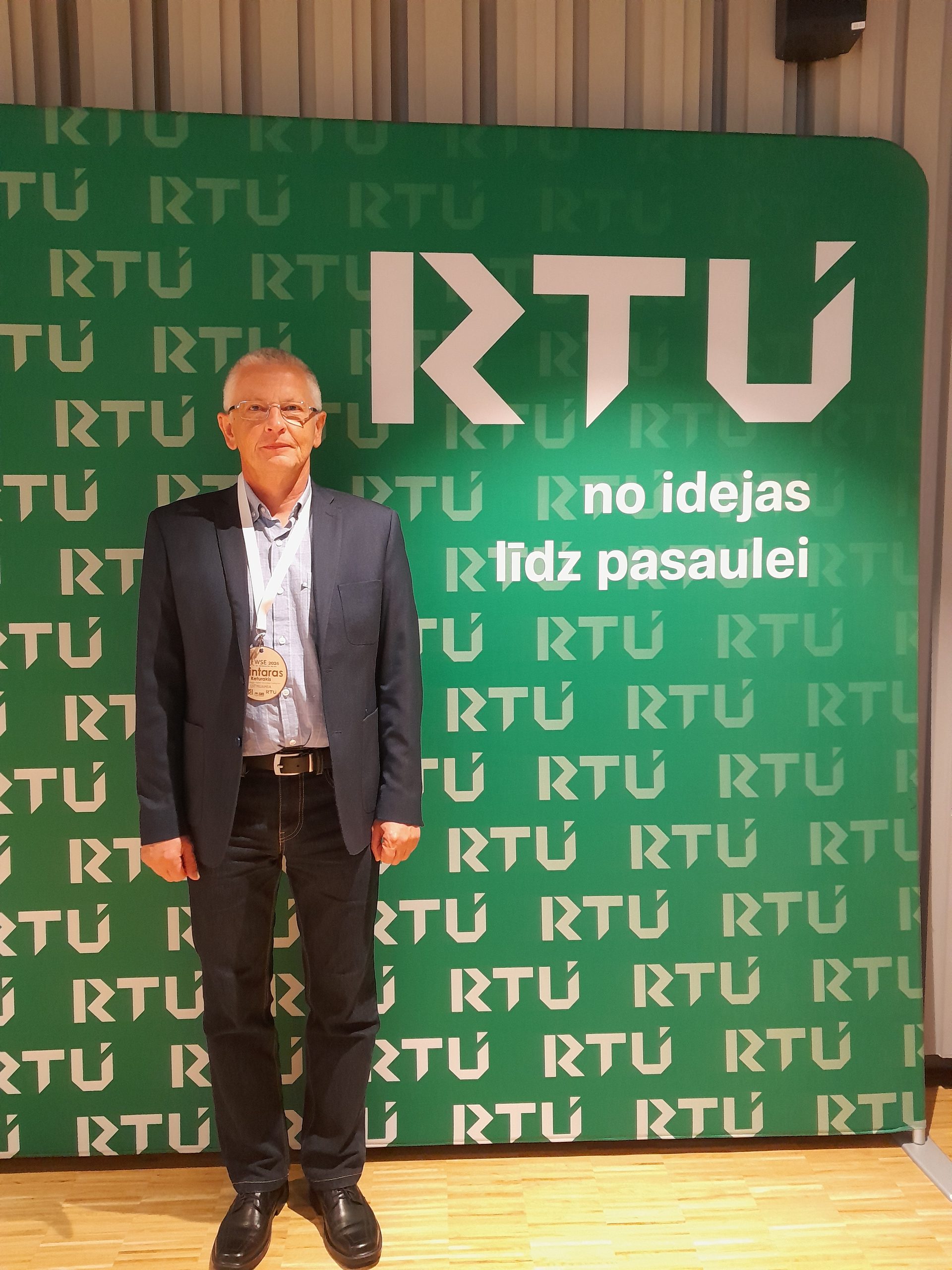
Researchers from the Materials Engineering research subgroup at Kauno kolegija also presented their findings at the conference. Gintaras Keturakis, Darius Albrektas and Žygimantas Kujalavičius delivered a presentation entitled ‘Wood Surface Quality Analysis: A Comparative Study of 2D Profilometry and 3D Scanning Methods’.
The study examines methods for assessing wood surface quality by comparing 2D profilometry with 3D scanning techniques. Participation in the international conference provided the researchers with an opportunity to present their findings to the international scientific community, exchange experience and establish new professional connections with researchers and representatives of the wood sector from other countries.
WSE 2026 once again demonstrated that the future of wood science and engineering is inseparable from interdisciplinary cooperation, innovation and the ability to adapt to a rapidly changing environment. Climate change, resource efficiency, the circular economy and the application of advanced technologies are becoming increasingly important factors shaping the development of the wood sector.