Lithuania in the world of science: Kauno kolegija associate professor’s insights on value-creating internationalisation
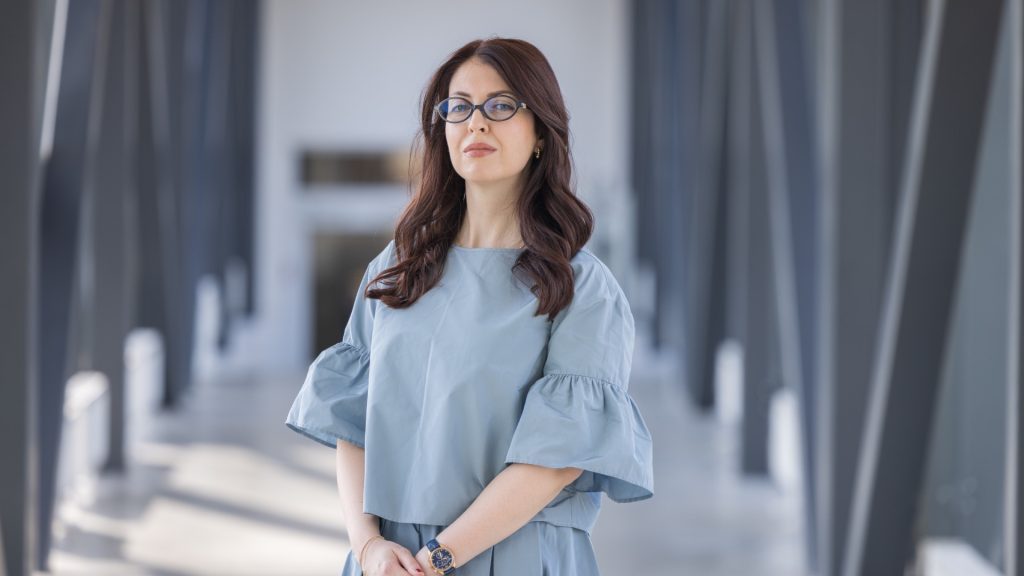
Dr Marijana Prodanović, an associate professor at the Language Centre of the Faculty of Arts and Education at Kauno kolegija Higher Education Institution, knows Lithuania well – her academic path has been intertwined with the country for several years. A researcher in intercultural communication, multilingualism, and academic language, her work examines how different languages and cultures shape scientific discourse and international collaboration.
Holding a PhD in linguistics and conducting research across Serbia, Bosnia and Herzegovina, Spain, and Lithuania, Dr M. Prodanović shares her insights on what makes Lithuania attractive to international researchers, the challenges posed by differing cultures, and the shifting landscape of higher education.
A small country with big opportunities
The academic recounts that she first encountered Kauno kolegija in 2017 – a meeting that sparked initial academic ties, which eventually grew into a closer collaboration.
‘I could say that I was drawn to Lithuania and this institution by the opportunity to contribute to a growing academic environment that highly values international cooperation and applied research,’ shares Dr M. Prodanović.
She is delighted that Kauno kolegija welcomed her so warmly: ‘The strong focus on practical activities set this institution apart from others where a purely theoretical academic environment prevailed.’ When asked what Lithuania offers the global scientific community, she argues that its strength lies in balance.
‘In Kauno kolegija, and within the Lithuanian scientific field in general, I see a dynamic balance between openness and ambition – higher education institutions are eager to build international partnerships and strengthen their research directions,’ says the researcher.
As Dr M. Prodanović emphasises, it is not just about opportunities. According to her, equally important is the shared worldview, the ability to embrace innovation openly, creativity, novelty, and intercultural exchange: ‘All this together creates a favourable environment for scientific research.’
Between languages and cultures: where the real challenges lie
According to the researcher, internationalisation today is often a high-sounding but not always fully understood term. In practice, it means much more: diverse and inclusive audiences, joint projects, and constant multilingual communication.
‘When intercultural meetings take place, the main challenges usually arise from trying to understand cultural subtleties while ensuring inclusion and maintaining high academic standards across different experiences and contexts,’ she states.

In her research, she observes that although institutions worldwide adopt English as a common means of communication, cultural nuances still shape how ideas are expressed and understood. Dr M. Prodanović reveals that these factors determine how thoughts are articulated and perceived. Consequently, minor misunderstandings or even deeper misconceptions can arise, which must be resolved through both verbal and non-verbal signals. For this reason, the use of English as a common language for studies and scientific communication is both an opportunity and a challenge.
‘On the one hand, it opens doors to international collaboration and helps attract foreign students; however, there is also a risk that local languages and cultural identities may be overshadowed. Therefore, the search for balance is paramount – how to preserve national heritage while ensuring global accessibility,’ says Dr M. Prodanović.
Kauno kolegija: from theory to real impact
When asked what makes Kauno kolegija stand out, the scholar highlights the strong link between science and practice – in her view, the knowledge created here is directly applied in business and society.
‘This is exactly why the institution becomes particularly relevant in international projects, where not only the theoretical contribution but also tangible results are important. I believe that Lithuania has great potential to become visible in the fields of applied science and interdisciplinary projects, rather than simply following in the footsteps of other countries,’ shares the associate professor.
She notes that these opportunities are driven by Lithuania’s flexibility and ability to offer a fresh perspective – especially where smaller countries and their higher education systems have more agility to react quickly and experiment boldly.
Based on the latest trends and scientific insights, higher education, according to Dr M. Prodanović, is undergoing a fundamental transformation – it is increasingly shaped by digitalisation, flexible learning models, and a growing demand for skills that transcend individual disciplines.
‘Lithuania is no exception – it has every opportunity to adapt quickly, exploit its openness to innovation, and strengthen international ties to remain competitive in a rapidly changing environment,’ the researcher concludes.