

Associate Professor Dr Marijana Prodanović’s monograph Lost and Found in Translation – a significant contribution to translation studies
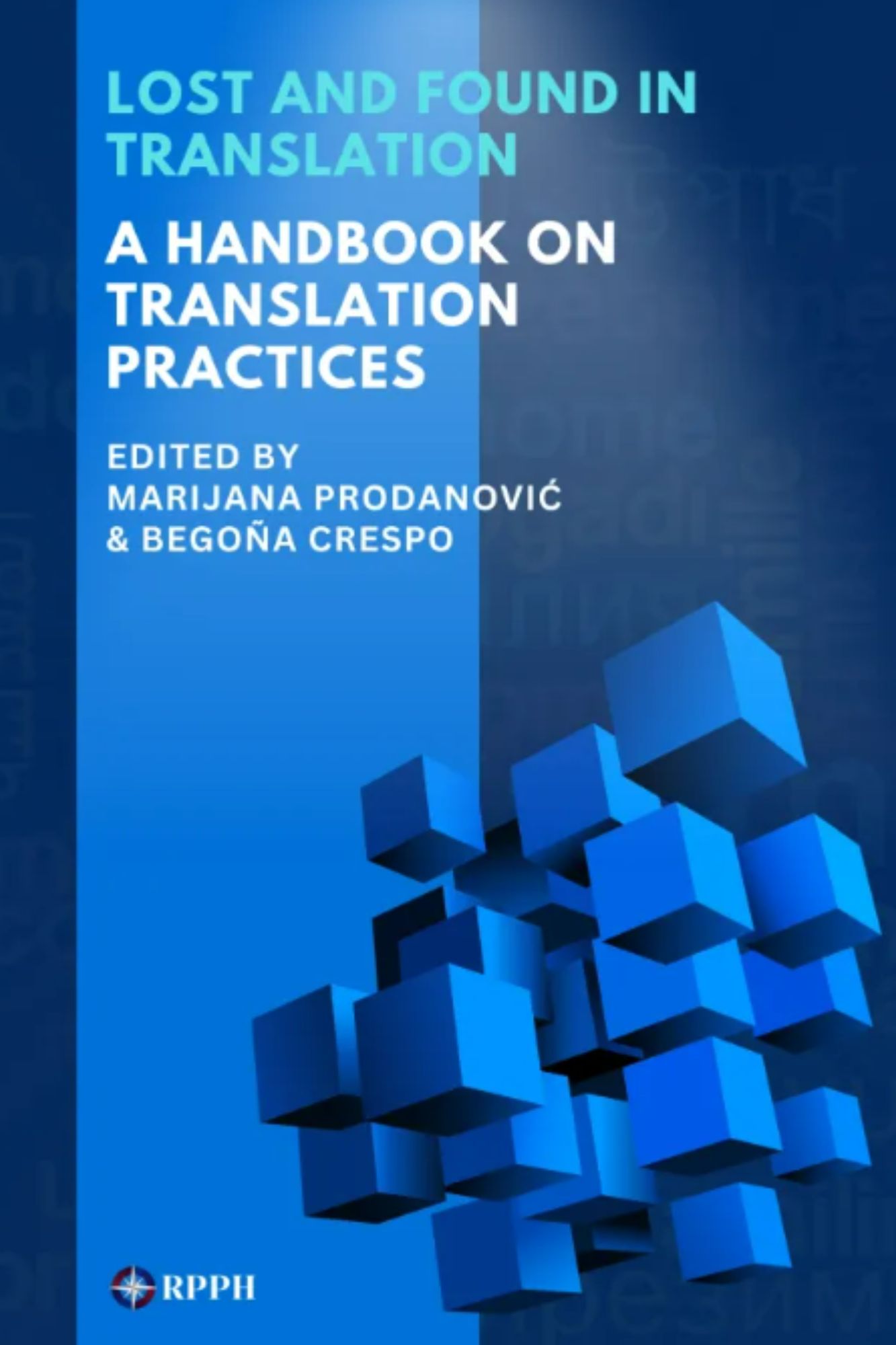
Associate Professor Dr Marijana Prodanović of the Language Centre at the Faculty of Arts and Education, Kauno kolegija Higher Education Institution, in collaboration with colleagues from the faculty, has prepared and published the monograph Lost and Found in Translation: A Handbook on Translation Practices. The publication is intended for professionals working in the field of translation practice as well as for those with an academic or professional interest in translation studies.
We are delighted to celebrate the publication of this monograph and its importance not only to the academic community but also to practising translators and educators. We spoke with the editor of the volume about the idea behind the book, its development process, and its relevance today.

Relevance in today’s context
According to Dr M. Prodanović, the publication is aimed at a broad readership – experienced translators, lecturers, students, and language professionals. The primary goal of the monograph is to share practical guidance, experience-based insights, and diverse perspectives on translation, helping readers better understand the complexity of translation practice and address professional challenges effectively.
As translation practice continues to evolve in response to constantly changing demands, the monograph aspires to serve as a reliable resource both in professional settings and in academic environments.
Distinctiveness in the field of translation studies
The monograph stands out for its accessible, clear, and reader-friendly style. It is suitable for both experienced practitioners and those who are just beginning to explore the field. The structure of the book allows readers to select topics of interest and explore them independently, as each chapter is designed to function as a self-contained unit.
‘The publication is distinctive in that it brings together different perspectives: the experience of translators and interpreters, a scholarly approach to translation processes, and long-standing pedagogical practice in the classroom,’ notes Dr M. Prodanović.
Contribution of the faculty community
The publication also reflects the close collaboration within the Faculty of Arts and Education. The monograph includes individual and jointly authored chapters by Albertas Juodeika, Ieva Brazauskaitė-Zubavičienė, Asta Pukienė, and Kristina Juodeikienė.
Dr M. Prodanović is not only the author of one of the chapters but also the editor and compiler of the monograph.
Development process and future directions
The preparation of the monograph once again highlighted the complexity of translation practice. One of the main challenges was selecting the topics, as contemporary translators encounter an exceptionally wide range of professional situations on a daily basis.
The editorial team sought to ensure that the themes discussed in the book would be applicable both in real-life translation practice and in study programmes. Although artificial intelligence is not examined in detail in this volume, the editor emphasises that, given the rapid development of this field, it undoubtedly merits a dedicated publication in the future.
It is hoped that Lost and Found in Translation: A Handbook on Translation Practices will become a valuable resource and a source of inspiration for practising translators and the academic community alike.
We invite you to explore the monograph Lost and Found in Translation: A Handbook on Translation Practices.