Kauno kolegija Library and Scientific Communication Centre: a decade of technological breakthrough and leadership
In the contemporary higher education ecosystem, information and scientific centres play a strategically important role, becoming an integral part of studies and research. Over a decade of focused and consistent work, the Library and Scientific Communication Centre of Kauno kolegija Higher Education Institution has become a national leader in innovation among academic libraries.
According to the Head of the Centre, Dr Lina Šarlauskienė, Chair of the Lithuanian Library Council under the Ministry of Culture, this unit of the higher education institution not only implements the most advanced technological solutions, but also shapes the national culture of academic ethics and the use of artificial intelligence.
International recognition
Dr Inga Stravinskienė, Vice Director for Research and Development at Kauno kolegija, emphasises that the Library and Scientific Communication Centre is one of the most important units, making a significant contribution to ensuring and improving the quality of studies and applied research.
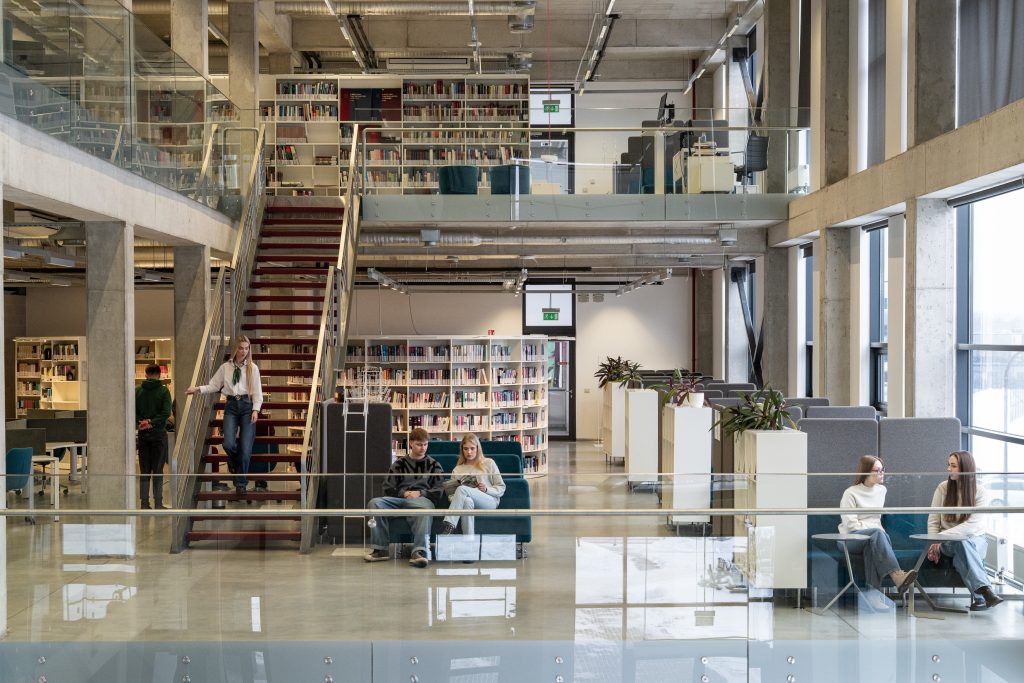
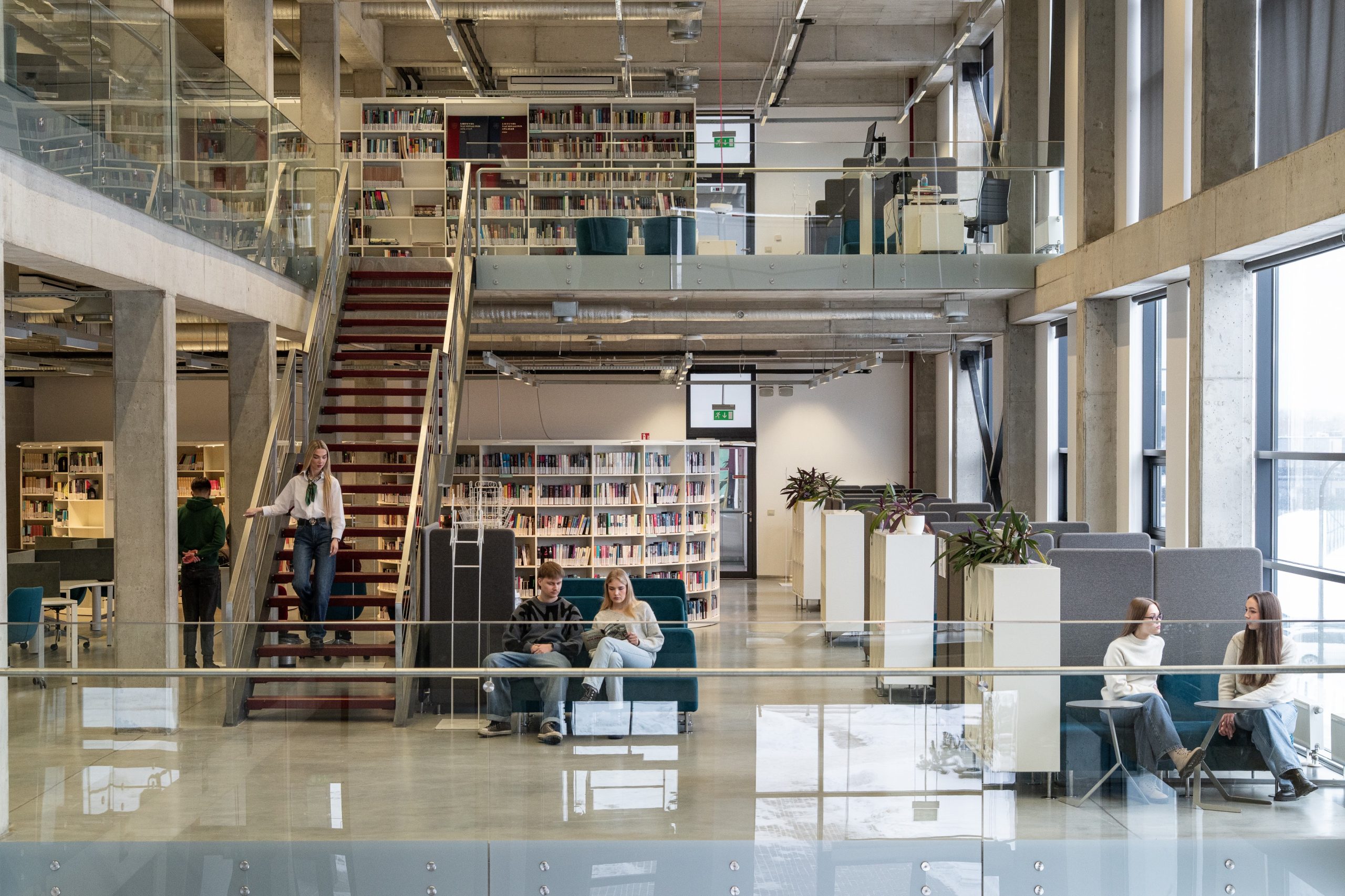
‘The quality of the Centre’s activities and the diversity of services provided are highly valued during international study field evaluations. It is noteworthy that in 2022, international experts who assessed the activities of Kauno kolegija identified the library as an example of good practice, highlighting its modernity, the quality of its resources, and its excellently equipped study spaces for group work and individual learning,’ notes Dr I. Stravinskienė, adding that in recent years particular attention at the Centre has been devoted to research communication.

At the forefront of innovation: Kauno kolegija first in the country to implement
advanced library tools
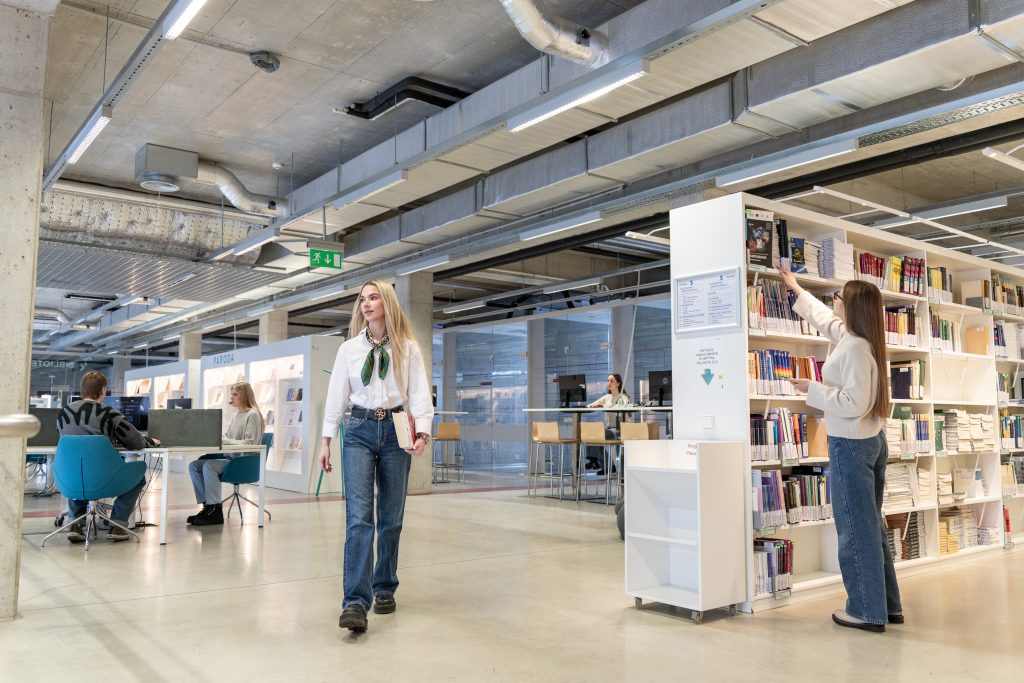
Dr L. Šarlauskienė points out that a modern infrastructure meeting the needs of students, lecturers and researchers has been purposefully developed over the past decade. At the same time, efforts have been made to ensure that the Centre functions as a modern academic library, offering innovative services and the most relevant information resources.
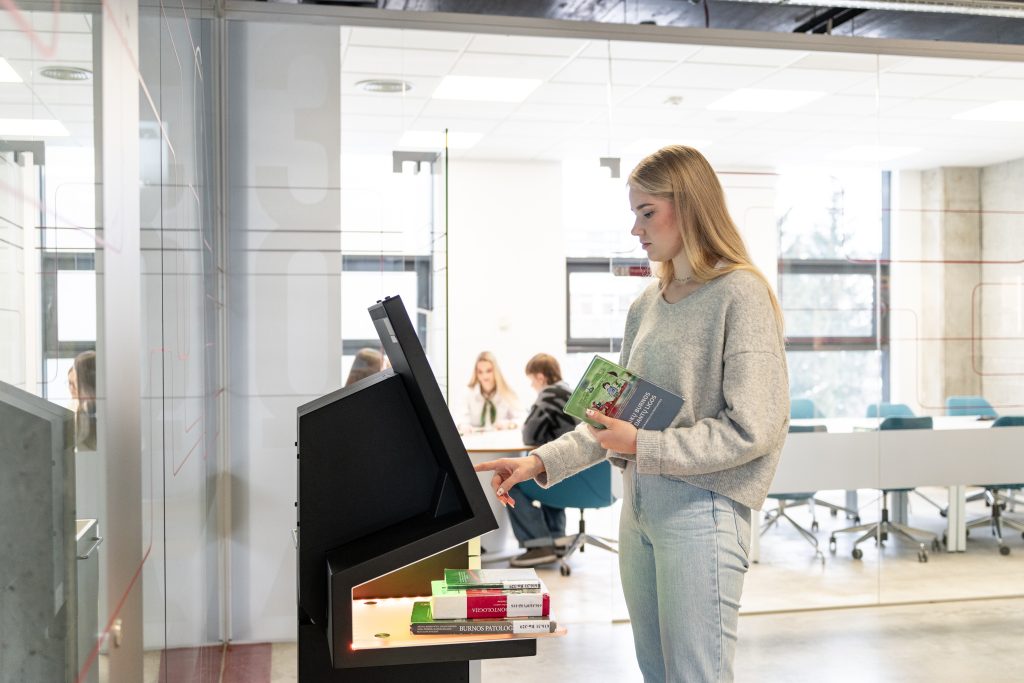
‘The library’s physical and virtual spaces now complement one another; they are interconnected and integrated through various services and implemented technologies: the latest international library systems with e-resource management capabilities, an interactive library map, the Rialto tool for purchasing e-books, the Ezproxy tool for accessing electronic resources in databases or the virtual library, the Alma Digital tool for access to the institution’s electronic publications, the OJS system for publishing academic journals, and others,’ shares Dr L. Šarlauskienė.
The Library and Scientific Communication Centre offers around half a million resources for studies and research. According to the Head of the Centre, it is therefore important to create conditions enabling the community to efficiently find the most relevant sources, cite them intelligently, and use them ethically. To this end, the Centre provides monthly on-site and remote training sessions, consultations, a Moodle course, and active dissemination of information in both physical and online library spaces.
This unit of Kauno kolegija also stands out for its active and bold implementation of new technologies and provision of modern services. According to Dr L. Šarlauskienė, this is linked to the systematic updating of library staff responsibilities and competences, as well as cooperation with other academic institutions in the country.
‘At the Centre’s initiative, Kauno kolegija was the first among Lithuanian state higher education institutions to implement the text similarity detection tool Turnitin. Together with two Lithuanian universities, the library independently implemented the international library system Alma and Primo, and a few years later became the first in the country to install the Rialto plug-in within the Alma system for acquiring e-books,’ says Dr L. Šarlauskienė.
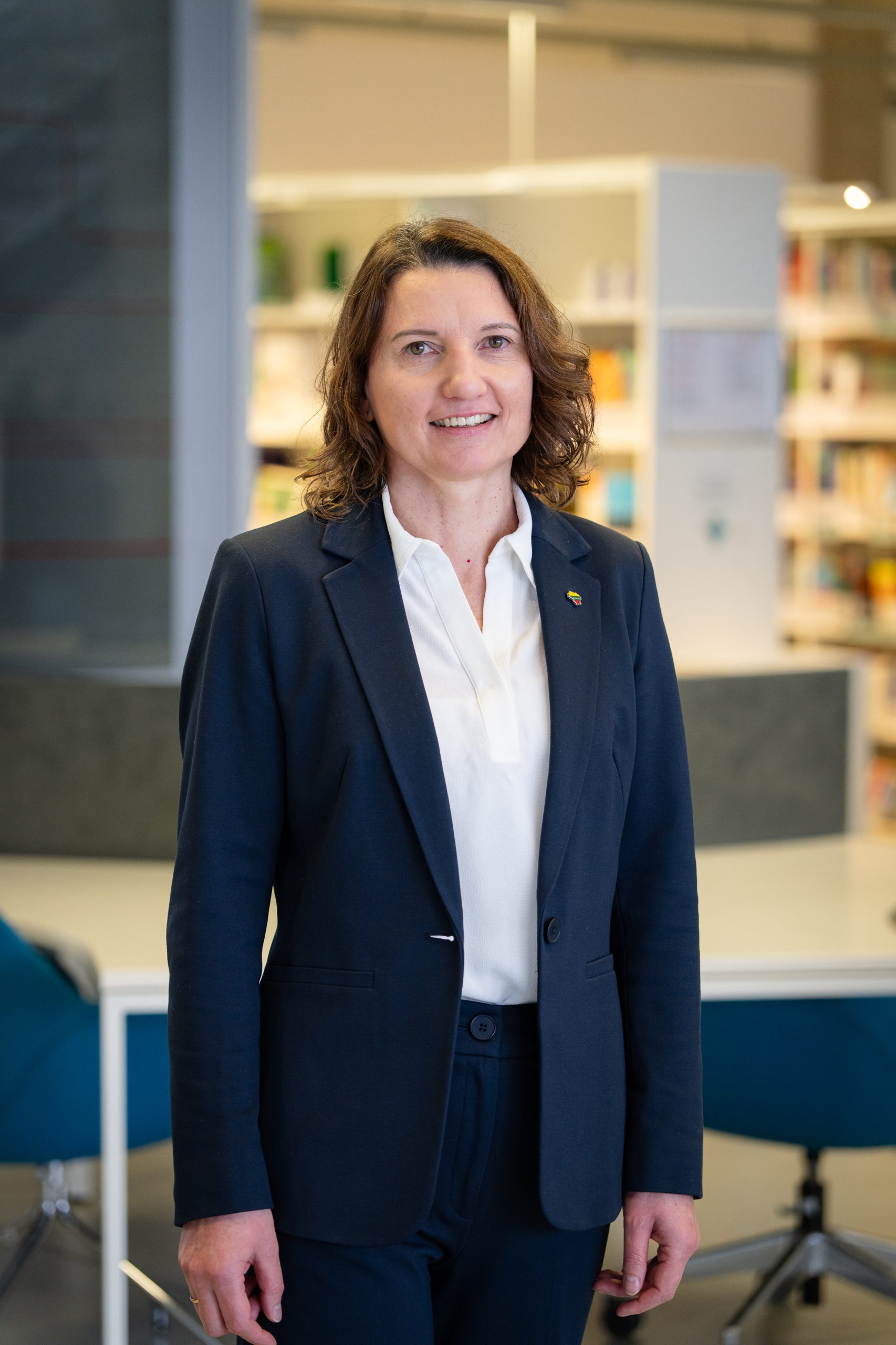
She notes that the library has consistently shared the competences it has gained in implementing these technologies and fostering a supportive community culture with university and higher education institution communities. This has not gone unnoticed: Dr L. Šarlauskienė was awarded a letter of appreciation from the eLABa consortium for her significant and long-term contribution to the development of the consortium’s activities and for advising its members on the newly implemented library systems Alma, Primo VE, Rialto, and the text similarity detection tool Turnitin.
From plagiarism prevention to artificial intelligence ethics
Dr L. Šarlauskienė says that the Centre is significant for Kauno kolegija not only in terms of providing library services, but also in integrating them into the study process and developing research communication. The use of the Turnitin tool encouraged the institution to create a comprehensive plagiarism prevention system and to foster a new culture of academic literacy within the community, particularly in relation to the use of AI tools.
‘Library staff were the principal developers of formal processes in this field, as well as educators and tireless consultants during the initial years of implementing the plagiarism prevention system. When the global expansion of artificial intelligence tools began, the Kauno kolegija’s library was one of the first in the country to initiate the preparation of institutional guidelines on the ethical use of AI and to organise a national seminar for higher education institutions on this topic,’ says Dr L. Šarlauskienė.
In the field of research communication, the Library and Scientific Communication Centre, she adds, has been a significant driving force within the institution. It has contributed to the first formal regulatory processes for research activities and to qualitative improvements in research outcomes; initiated the use of the eLABa publications database; revised the quality principles of publishing; renewed the publication of the Kauno kolegija’s academic journal and registered it in the international Directory of Open Access Journals (DOAJ); and consistently provided consultations on research publishing and evaluation issues.
A strategic role in seeking university of applied sciences status
Dr L. Šarlauskienė notes that recently the role of the library in scientific communication has grown, as reflected in the change of the Centre’s name and the expansion of its activities. This is related to new national regulations governing research activities in higher education institutions. In order to remain higher education institutions or to become universities of applied sciences after 2028, higher education institutions must now rapidly adapt to new and high research standards and achieve the prescribed results.
‘Higher education institutions now require the same competences in research activities as universities. Therefore, the library must provide consultations on all aspects of research communication, for example: publishing academic articles in high-level scientific journals; the selection of journals and conferences; publishing; copyright; research data; open science; the use of artificial intelligence; and more,’ says Dr L. Šarlauskienė.

She adds that the Library and Scientific Communication Centre is now also responsible for the activities of the editorial board of the Kauno kolegija’s academic journal; quality assurance, publication and DOI registration of Kauno kolegija’s research publications; registration and reporting of research and artistic outputs; and the dissemination of scientific conferences and publications.
Vision for the future: regional innovation and AI tools for researchers
Dr L. Šarlauskienė reveals that in the coming years the Library and Scientific Communication Centre intends to further strengthen its research communication activities. Plans include subscribing to research evaluation databases required by researchers, equipped with AI tools for searching and analysing scholarly information. The Centre also intends to contribute to the implementation of open science principles within the institution.
Another planned direction of development is the creation of inclusive academic literacy education initiatives and the provision of interactive consultations, while maintaining the courage to continually seek innovative and contemporary solutions. The third priority area is the modernisation of library services and spaces in the Kauno kolegija’s regional branches.
‘Over the past decade, the Library and Scientific Communication Centre has accumulated experience that it intends to continue building upon and sharing. Figuratively speaking, the library is a technological and spatial arch of knowledge, through which every student, lecturer or researcher is accompanied by friendly guides,’ concludes Dr L. Šarlauskienė.